Genocide .live

Re-opening of the Rafah crossing
01 February, 2026Re-opening of the Rafah Crossing | announcements versus reality:
The National Committee for the Administration of Gaza reiterated the start of the “experimental operation” of Rafah in both directions, limited to humanitarian cases (patients, students, family reunification). This administrative language unfolded alongside airstrikes, drone fire, and condolence houses being bombed, exposing the gap between paperwork and lived reality under israeli occupation.
Timeline of the events:
On February 2, 2026, the Rafah border crossing — Gaza’s only border point with Egypt not controlled by Israel before the genocide — was reopened in a limited capacity after nearly two years of closure during the ongoing siege and genocide in Gaza.
The move is presented as a key step in phase two of a U.S.-brokered ceasefire agreement, supposedly intended to ease isolation and allow limited movement of people. In reality, it functions as a new tool of ethnic cleansing and an enforcement mechanism of genocide, carried out with the complicity of the United States and the international community, including EU observers.
Rafah is Gaza’s main gateway to the outside world that does not pass through Israel. It has remained largely closed since its capture by Israeli forces in May 2024. Its limited reopening is framed as enabling medical evacuations, travel abroad, and family reunifications, particularly for Palestinians stranded by war and blockade.
Who can cross — and how
Movement remains extremely restricted. Only a small number of Palestinians are permitted to cross each day — up to 150 toward Egypt, primarily patients and wounded individuals, and only on foot. All movement is subject to security screenings and intelligence vetting, coordinated between Israel, Egypt, and international observers. Priority is reportedly given to critically ill patients, with ambulances and Egyptian hospitals on standby.
Despite the catastrophic humanitarian situation, marked by more than two years of siege and manufactured starvation, goods and humanitarian aid are not allowed through Rafah as part of this reopening. The process focuses on people, not supplies. Stringent Israeli security conditions — including prior approvals and joint screening — severely limit access, leading critics to describe the reopening as a pilot phase rather than a genuine restoration of movement.
Broader context
The reopening takes place within the framework of the Trump-brokered Gaza ceasefire plan, which established the “Yellow Line” as a temporary internal Israeli military demarcation. It is also tied to broader negotiations on Gaza governance and discussions around Hamas disarmament.
In practice, Rafah functions as a controlled checkpoint, not a sovereign border. Israel controls the surrounding territory on both the Gaza and Egyptian sides, having leveled large areas to create buffer zones, military installations, and surveillance corridors. Most Palestinians remain trapped, while the reopening creates only the illusion of limited freedom of movement.
Timeline of the events
On February 2, 2026, only five patients out of 450 in critical condition were allowed to leave Gaza, according to Dr. Mohammed Abu Salmiya, director of Al-Shifa Hospital in northern Gaza City. We were informed that today only five patients will be allowed to exit with two companions through the Rafah crossing,” he said. Health authorities report that at least 1,268 people have died while waiting for medical evacuation since the crossing was closed. In total, around 20,000 patients, including 4,500 children, urgently require treatment outside Gaza.
The Rafah crossing has reopened under EU supervision (EUBAM), but movement remains tightly controlled. Palestinians returning from Egypt face hours-long delays and cannot enter Gaza directly. Israel has established a military checkpoint — the “Regavim corridor” — outside the crossing, where Israeli security forces screen identities, verify intelligence-approved lists, and search belongings. Only after passing both Rafah and Israeli military screening are individuals permitted to enter the besieged enclave.
On February 3: The National Committee for the Administration of Gaza reiterated the start of the “experimental operation” of Rafah in both directions, limited to humanitarian cases (patients, students, family reunification). This administrative language unfolded alongside airstrikes, drone fire, and condolence houses being bombed, exposing the gap between paperwork and lived reality under israeli occupation.
Al Haq statement on X (February 3, 2026)
"The alleged “opening” of the #Rafah crossing must be understood as a component of Israel’s ongoing genocide in #Gaza: despite claims of humanitarian access, only 5 critically ill Palestinians were allowed to leave Gaza through Rafah (@WHO)& only 12 were allowed to return. Gaza’s Ministry of Health reports that approximately 20,000 Palestinians require medical evacuation, inc. 440 critical cases. They estimate it would take years to evacuate them if the crossing continues to operate at this rate & 10 critically ill people will die every day. Even if the reported 50 patients/day, only on foot, were permitted by Israel to evacuate, it would still take 400 days to evacuate all those currently in need of medical attention. Through bombardment, siege & the destruction of civilian infrastructure, Israel has caused mass injury & illness in Gaza while deliberately dismantling the healthcare system needed to treat both the wounded & those with critical conditions, inc. cancer & dialysis patients. Taken together, Israel has caused mass injury and illness through its ongoing genocide, destroyed the medical system capable of treating those affected, and then severely restricted access to urgent medical care outside Gaza. Destruction of Gaza’s healthcare system & attacks on infrastructure as Palestinians endure winter in tents, constitutes the deliberate infliction of conditions of life calculated to bring about physical destruction & serious bodily & mental harm (Art. II, Genocide Convention). At the same time, return is deliberately obstructed. Those who leave for life-saving treatment risk permanent displacement, while those blocked from leaving are left to die. These measures perpetuate the genocidal conditions of life and forcible transfer in an ongoing Nakba."
The Israeli occupation forces issued the following directives for people returning to Gaza:
"Each person is allowed entry with one personal bag containing only clothing and personal documents.
Each person is allowed to bring in up to 2000 NIS in cash (~$600), provided they submit a declaration 24 hours in advance.
Liquids (including water, deodorant, creams, and similar items) are not allowed.
Only one personal mobile phone is allowed; no other electronic devices are permitted.
Cigarettes are not permitted"
Testimonies of the returnees to Gaza On February 3, returnees to Gaza described severe abuse at the Rafah crossing, particularly against women and children, including prolonged detention, humiliation, harsh interrogations, and confiscation of personal belongings. Witnesses said the treatment aimed to intimidate returnees and deter them from going back to Gaza, worsening the suffering of those already affected by war and displacement. Two women, Sabah and Rotana Al-Raqab, testified to being beaten, restrained, threatened, and handed over to the Israeli army, with one accusing a local group of falsely claiming to protect civilians while cooperating with Israeli forces. Returnees also reported that most buses were turned back at the crossing, with only one allowed to enter Gaza. Despite describing the experience as *“a piece of hell’s torment,” *they emphasized that returning to their homeland remains their only choice.
On February 5,
L'OHCHR published a report "Patterns of ill-treatment and coercion reported among Palestinians returning to Gaza" confirming that for a third day, Palestinians returning to Gaza via the reopened Rafah crossing reported abuse and humiliation by Israeli forces. Accounts given to the UN Human Rights Office describe being detained by armed Palestinians allegedly backed by Israel, subjected to handcuffing, blindfolding, threats, theft, and then violent interrogations and invasive searches at Israeli checkpoints. Returnees also reported denial of medical care and bathroom access, coercive offers of money to leave Gaza permanently or act as informants, and treatment amounting to torture or degrading abuse. The UN warned this pattern may violate international law, discourage Palestinians’ right to return, and contribute to the ethnic cleansing of Gaza.
On February 6, reports indicates that only 36 medical cases from Gaza were allowed to travel by the Rafah Crossing since the re-opening of the border.
On February 7, The director of al-Tahrir Hospital at the Nasser Medical Complex warned that the health situation in Gaza has reached a catastrophic stage. Vital hospital departments face suspension due to destroyed equipment and severe shortages of fuel and oxygen. More than 21,000 patients are waiting to travel for treatment. The lack of cancer medications is directly leading to patient deaths. Israeli authorities continue preventing the entry of medical supplies and restricting international organisations.
@Hakeam_ps testimony on February 7, 2026
"Rafah crossing is no longer just a crossing — it has become a corridor of humiliation for leaving an open prison called Gaza. A prison not only restricted by borders — but overflowing with destruction, blood, systematic oppression, deliberate injustice, and deprivation managed as daily policy. Leaving it is not survival… but a test of dignity. Staying in it is not a choice… but a continuous punishment. Gaza today is not only besieged… it is being punished. Passing through it or returning to it is no longer a matter of procedure or timing but a harsh experience imposed on you entirely — where you are treated as a suspect and your dignity is tested step by step — simply because you are Gazan… for no other reason."
On February 8, 2026, after full closure, Israel only allowed 11 patients— out of the 50 permitted per day out of more than 20,000 left to— to depart towards the Rafah Crossing that hasn't truly opened.
On February 10, 2026, The seventh batch of patients and wounded people is set to leave the Gaza Strip via the Rafah crossing to receive urgent treatment abroad.
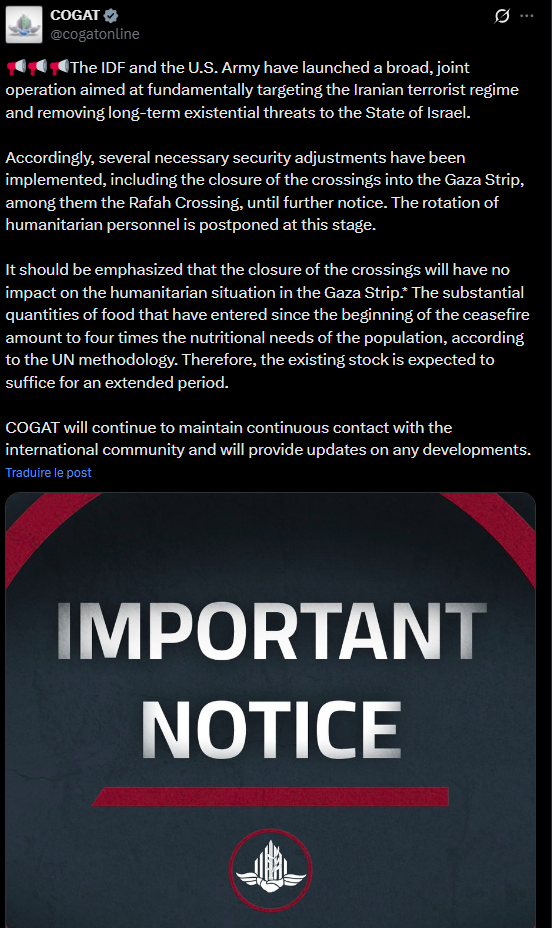
On February 28, Israel reimpose total siege on Gaza, closing all crossings into Gaza, including Rafah, “until further notice.” COGAT says humanitarian staff rotations are postponed, meaning no aid personnel can enter or leave. Israel falsely claimed: “The substantial quantities of food that have entered since the beginning of the ceasefire amount to four times the nutritional needs of the population… Therefore, the existing stock is expected to suffice for an extended period.” UN says less than 170 of the daily 600 trucks have been entering Gaza drive the ceasefire began.
On April 6, 2026, Palestinian Red Crescent Society, reported that the World Health Organization informed the Red Crescent that it had suspended the travel of humanitarian cases, including patients and their companions, as well as the return of cases via the Egyptian side to the Gaza Strip.
Tags
Links
Uploads
(34 of 34)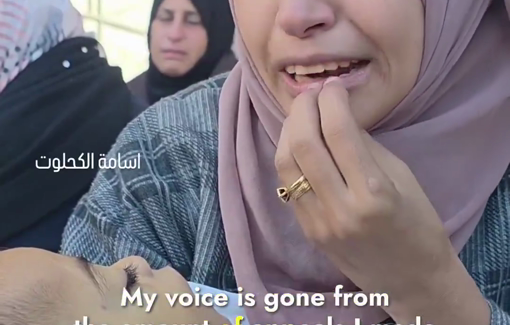
Two-year-old Nidal Abu Rabi’ died after his health deteriorated while waiting for permission to leave Gaza for treatment
23 February, 2026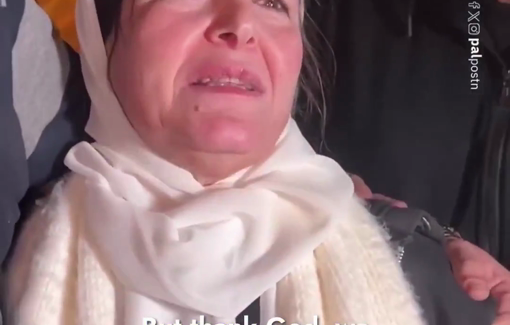
A mother returning to Gaza after two years describes the reunion with her children as “the sweetest” moment of her life
22 February, 2026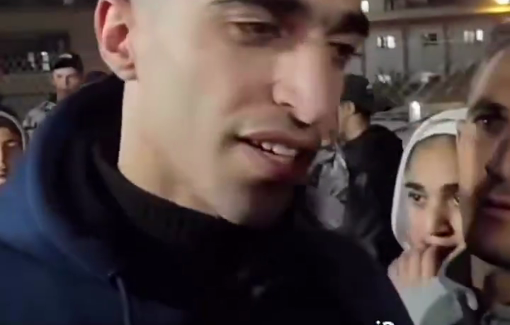
Through the Rafah crossing, a father returned after two years of absence to embrace his little daughter
16 February, 2026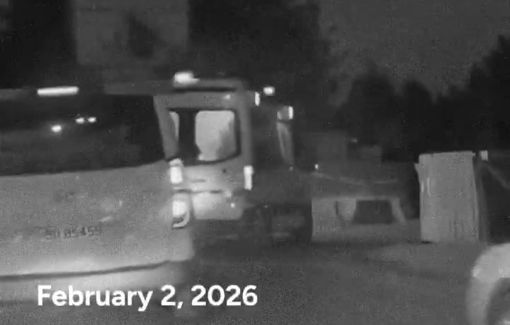
Dana is gone — denied her right to medical treatment and allowed to cross the border too late to be saved
16 February, 2026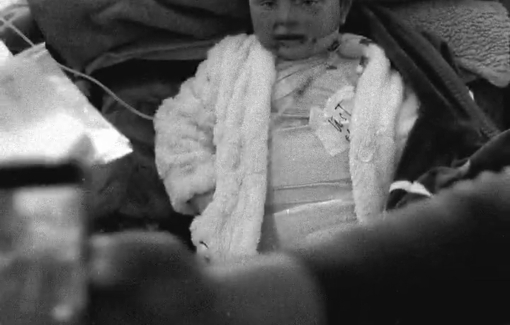
Dana is gone — denied her right to medical treatment and allowed to cross the border too late to be saved
16 February, 2026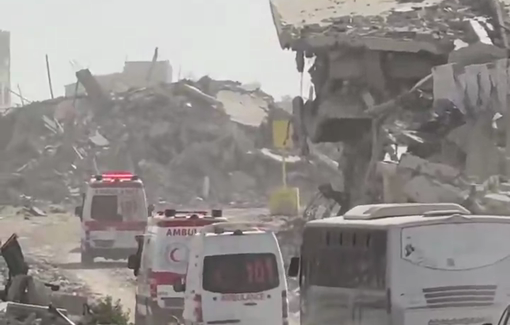
10th Medical evacuation from Khan Younis to Rafah border crossing
15 February, 2026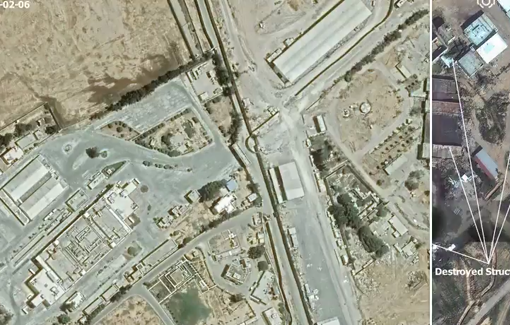
Aerial view of the Rafah Crossing, two years later
8 February, 2026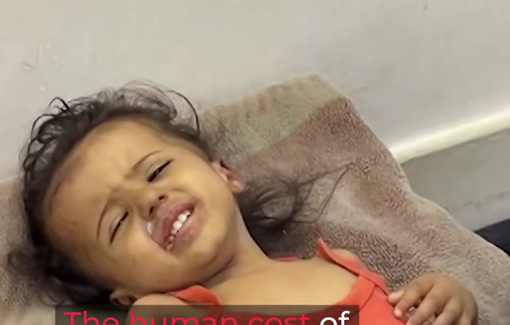
A mother lost her sick three-year-old daughter while waiting for the Rafah border-crossing to opeN
7 February, 2026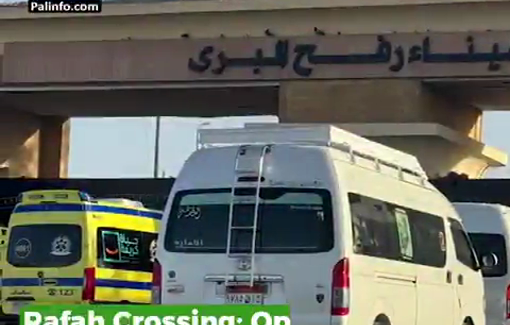
Medical delays are worsening Gaza’s ongoing humanitarian crisis
7 February, 2026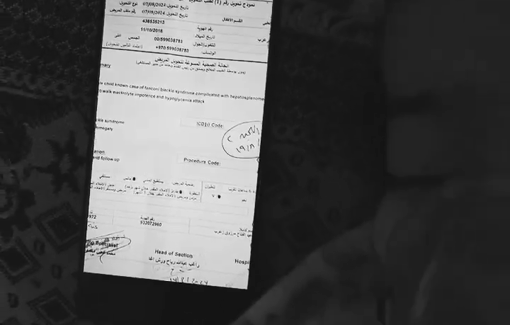
"I can't breathe" are the final words of the child Lana Zo'rob prevented by Israel and International community to cross the border to receive treatement
7 February, 2026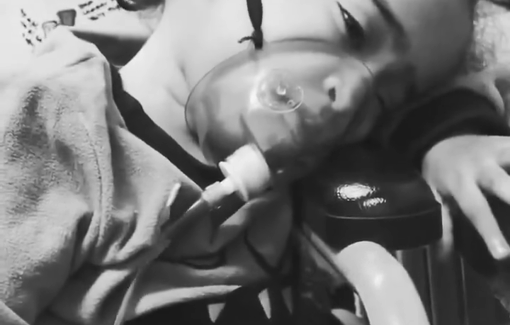
"I can't breathe" are the final words of the child Lana Zo'rob prevented by Israel and International community to cross the border to receive treatement
7 February, 2026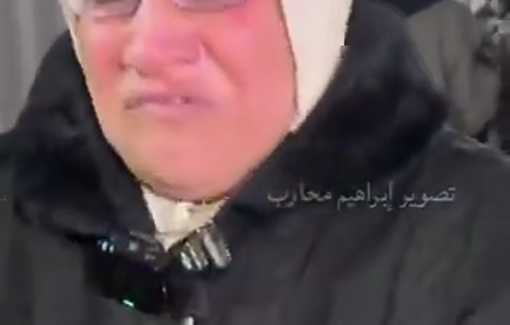
Palestinian woman detained, handcuffed, and abused by the Israeli army while returning to Gaza via Rafah crossing.
6 February, 2026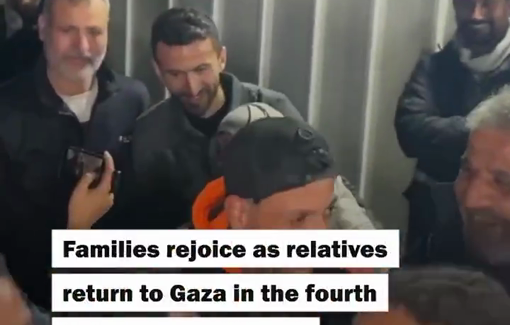
Scenes from the reception of the fourth batch of returnees to Gaza via the Rafah crossing
6 February, 2026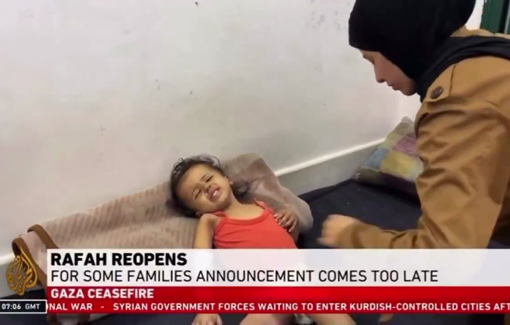
As soon as Ibtisam obtained the required documents to travel abroad for treatment, she passed away
6 February, 2026
The moment the fourth batch of returnees arrived in Gaza via the Rafah crossing, reaching Nasser Medical Hospital
5 February, 2026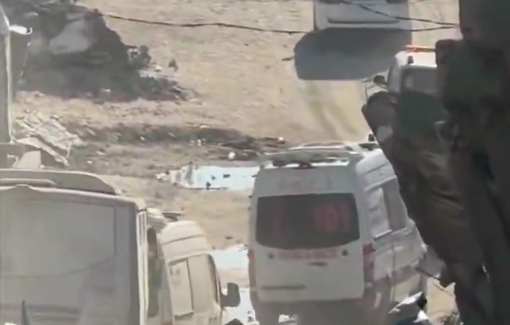
Only the fourth group of patient allowed to leave the Rafah crossing
5 February, 2026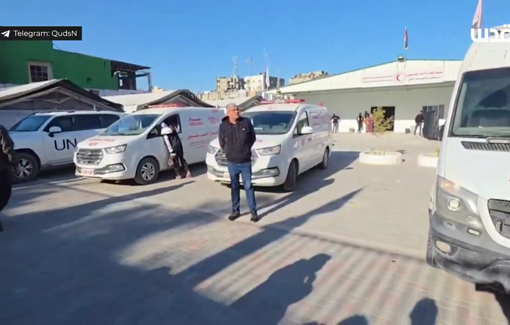
The fourth group of critically-ill and injured Palestinians is set to leave the Gaza Strip to receive urgent medical care abroad
5 February, 2026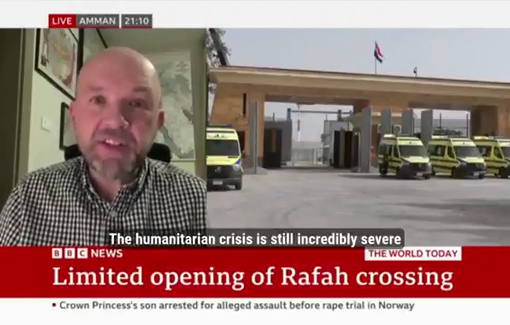
UNRWA spokesperson Jonathan Fowler warned that the limited operations at Rafah crossing are deepening Gaza’s humanitarian crisis.
4 February, 2026
A new group of returnees arrives in the Gaza Strip via the Rafah land crossing for the second consecutive day
4 February, 2026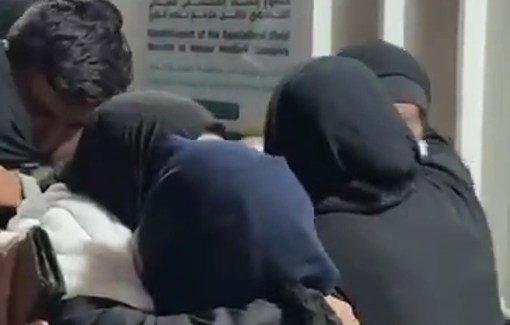
Rafah Crossing returnees abused “The Israeli army tried to take me. After an hour and a half—only with great difficulty—they let me go.”
3 February, 2026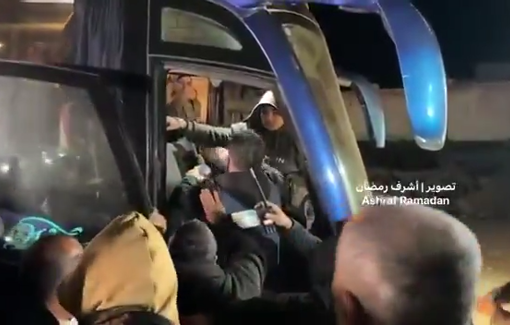
A new group of returnees has arrived in the Gaza Strip through the Rafah crossing, after a long journey of suffering.
3 February, 2026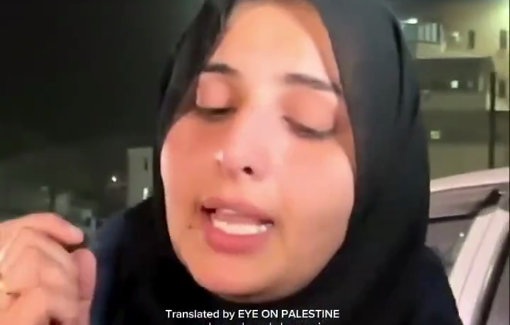
A Palestinian woman shares her ordeal during Israeli interrogations before entering besieged Gaza
3 February, 2026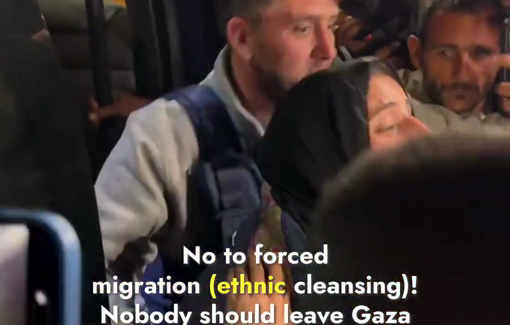
“No to forced migration!” a woman shouts as 15 women and children have just crossed from Egypt
2 February, 2026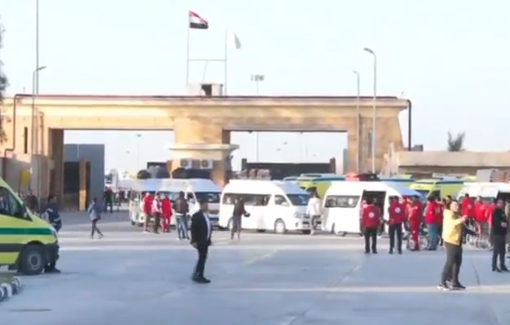
Moments of the arrival of the first group of Palestinians returning from Egypt to the Gaza Strip
2 February, 2026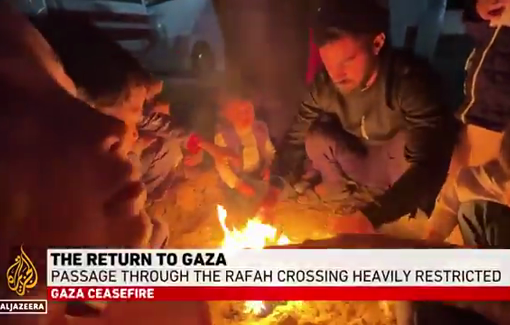
Families in Gaza have been anxiously awaiting the return of loved ones through the Rafah crossing with Egypt
February, 2026
The Entry of the EUBAM vehicles at the Rafah crossing
1 February, 2026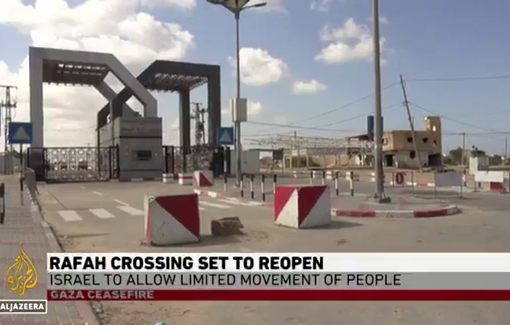
Journalist Nour Odeh of Al-Jazeera reports on the re-opening of the Rafah Crossing
1 February, 2026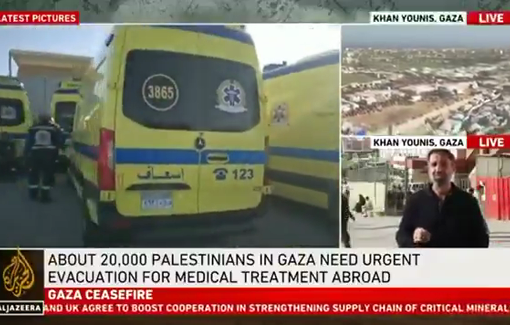
Israel is severely restricting movement through the Rafah crossing, allowing only 150 people to leave Gaza and just 50 to enter
1 February, 2026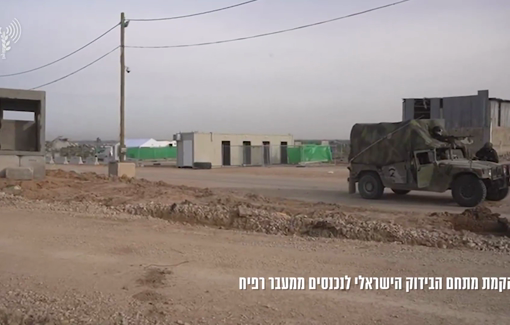
The IDF publishes footage of its military checkpoint for Palestinians entering the Gaza Strip from Egypt
1 February, 2026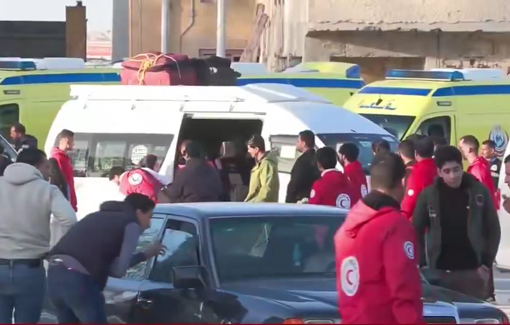
A crossing that once allowed thousands of people to pass daily, has now become severely restricted
1 February, 2026
Reopening of Rafah crossing: Humanitarian aid remains barred.
30 January, 2026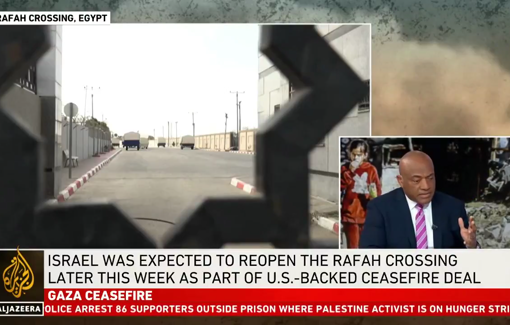
Babies born in Gaza since 2023 haven't been registered, the risk is they won't be allowed to return
26 January, 2026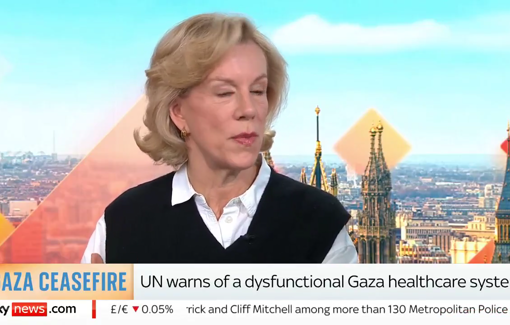
Juliet Stevenson: "There are 4 fully equipped mobile maternity clinics waiting to cross the border... they're not allowed across"
8 January, 2026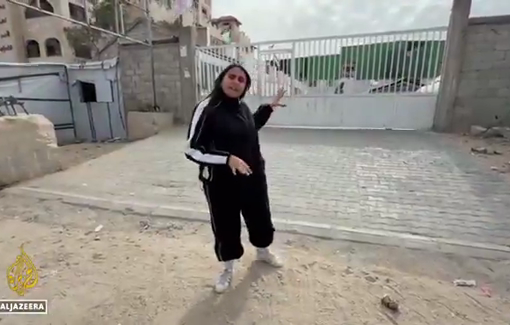
Journalist Hind Khoudary reports from Khan Younis, where only 37 medical cases have left Gaza since the Rafah Crossing reopened
Unknown DateImages
(12)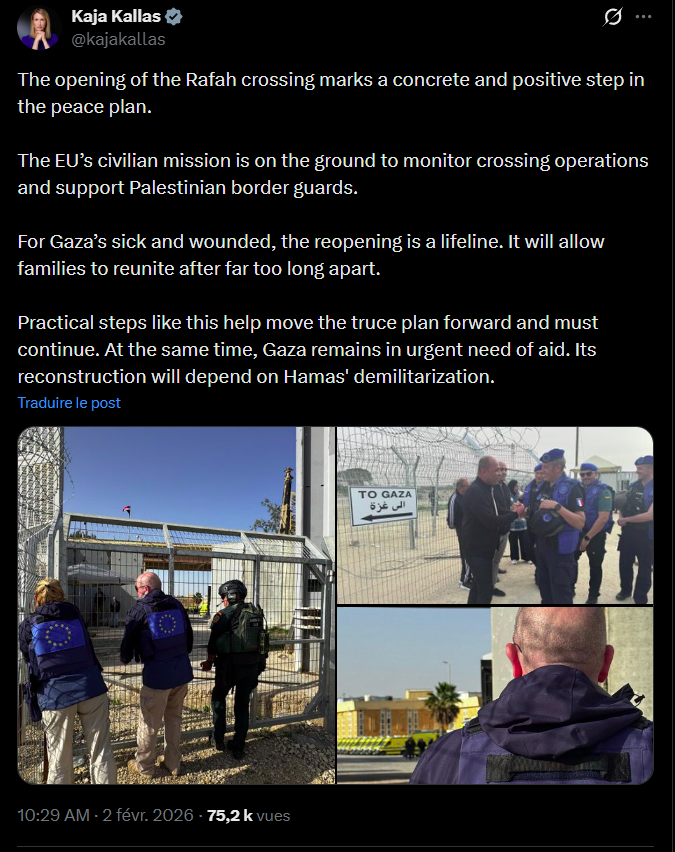
EU observatory team on February 2
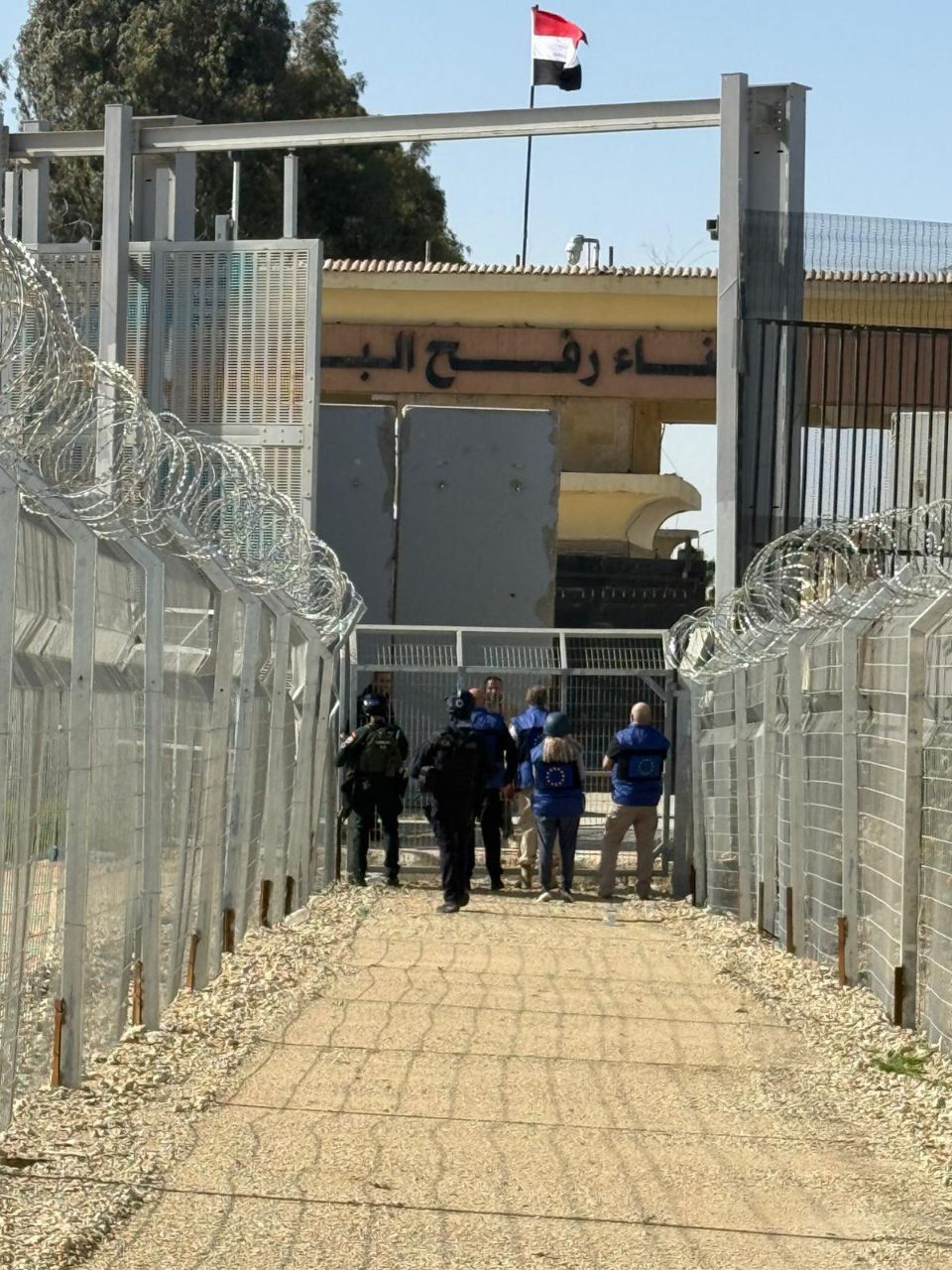
EU observatory team on February 2
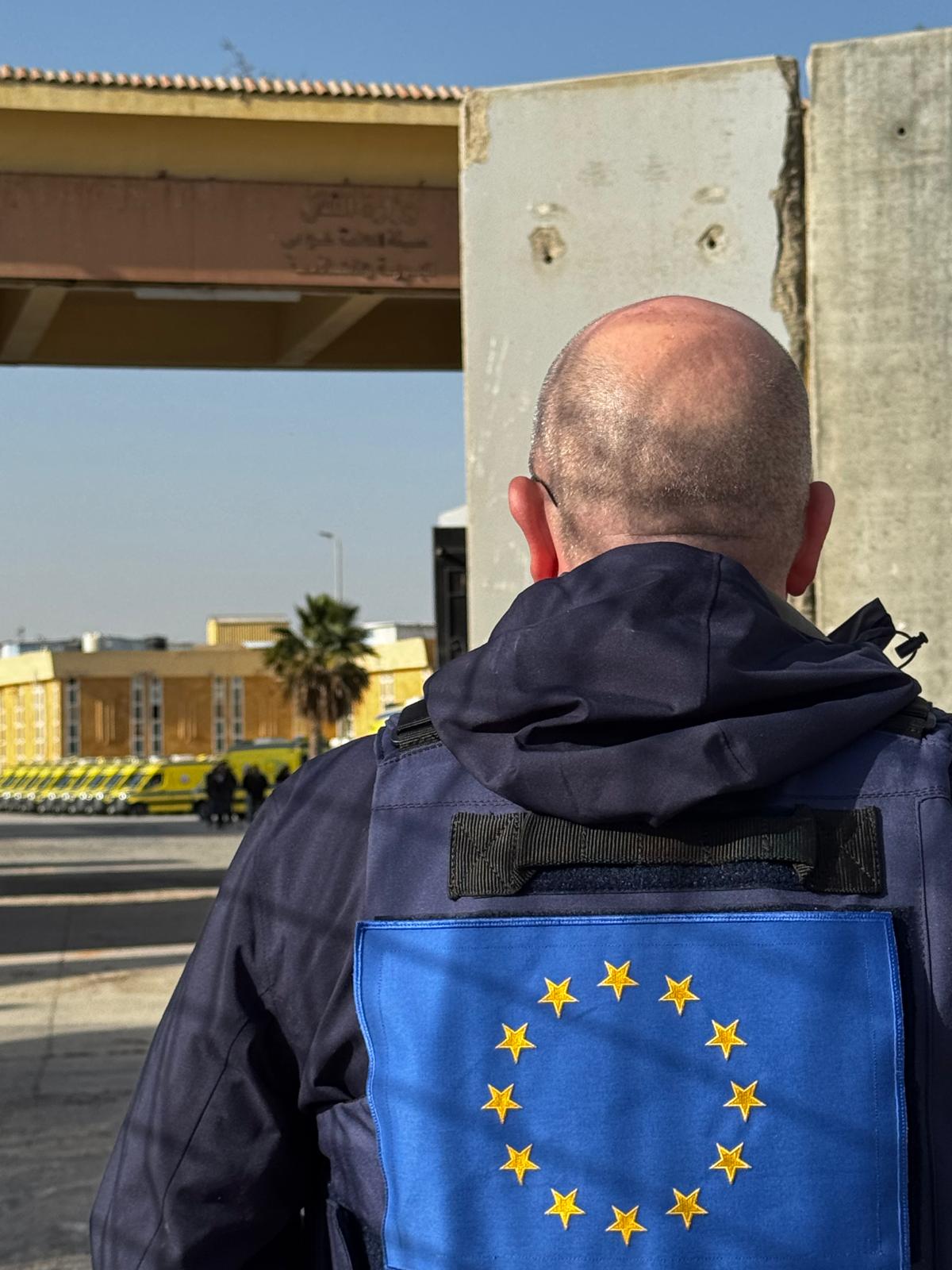
EU observatory team on February 2
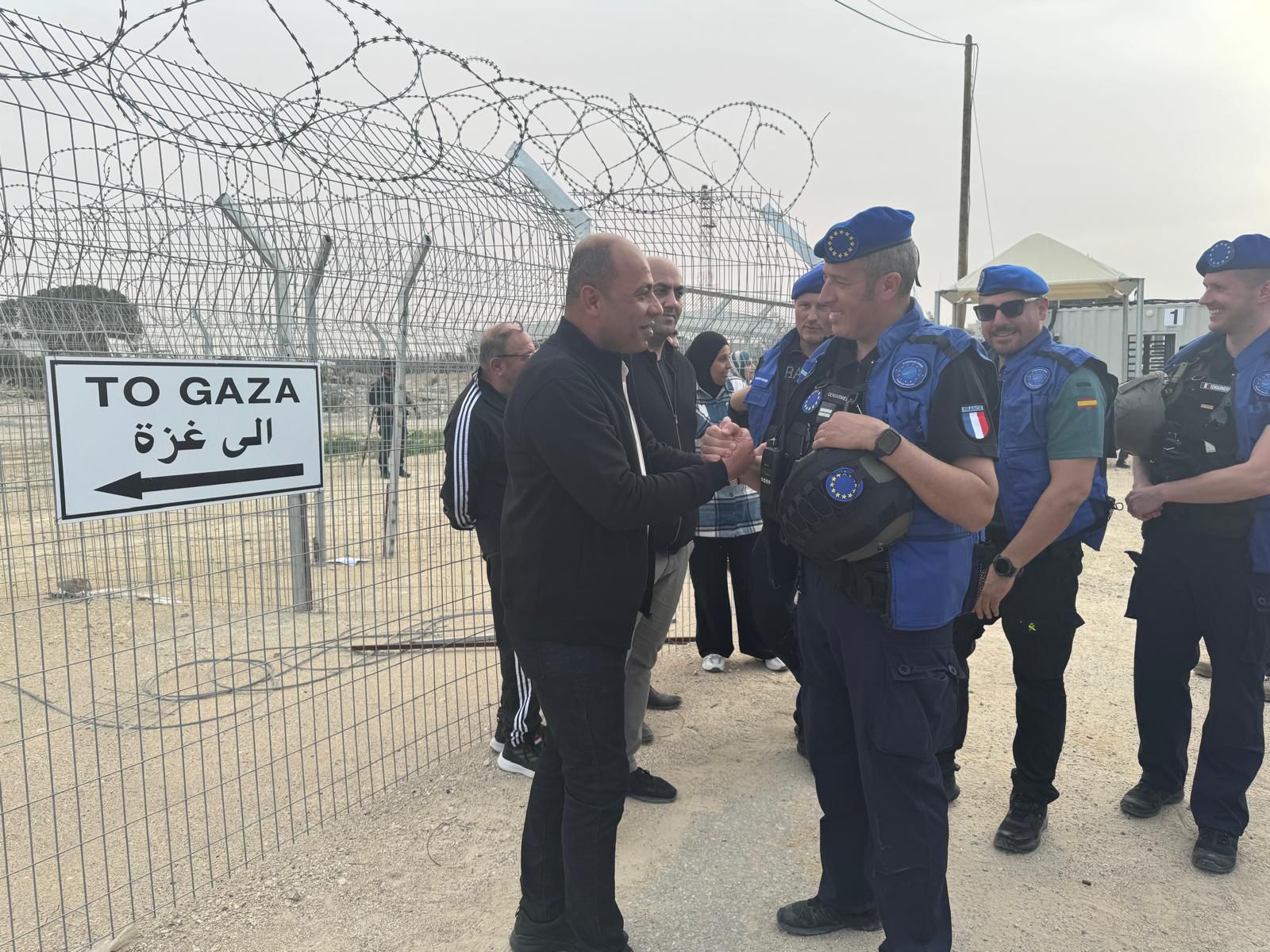
EU observatory team on February 2
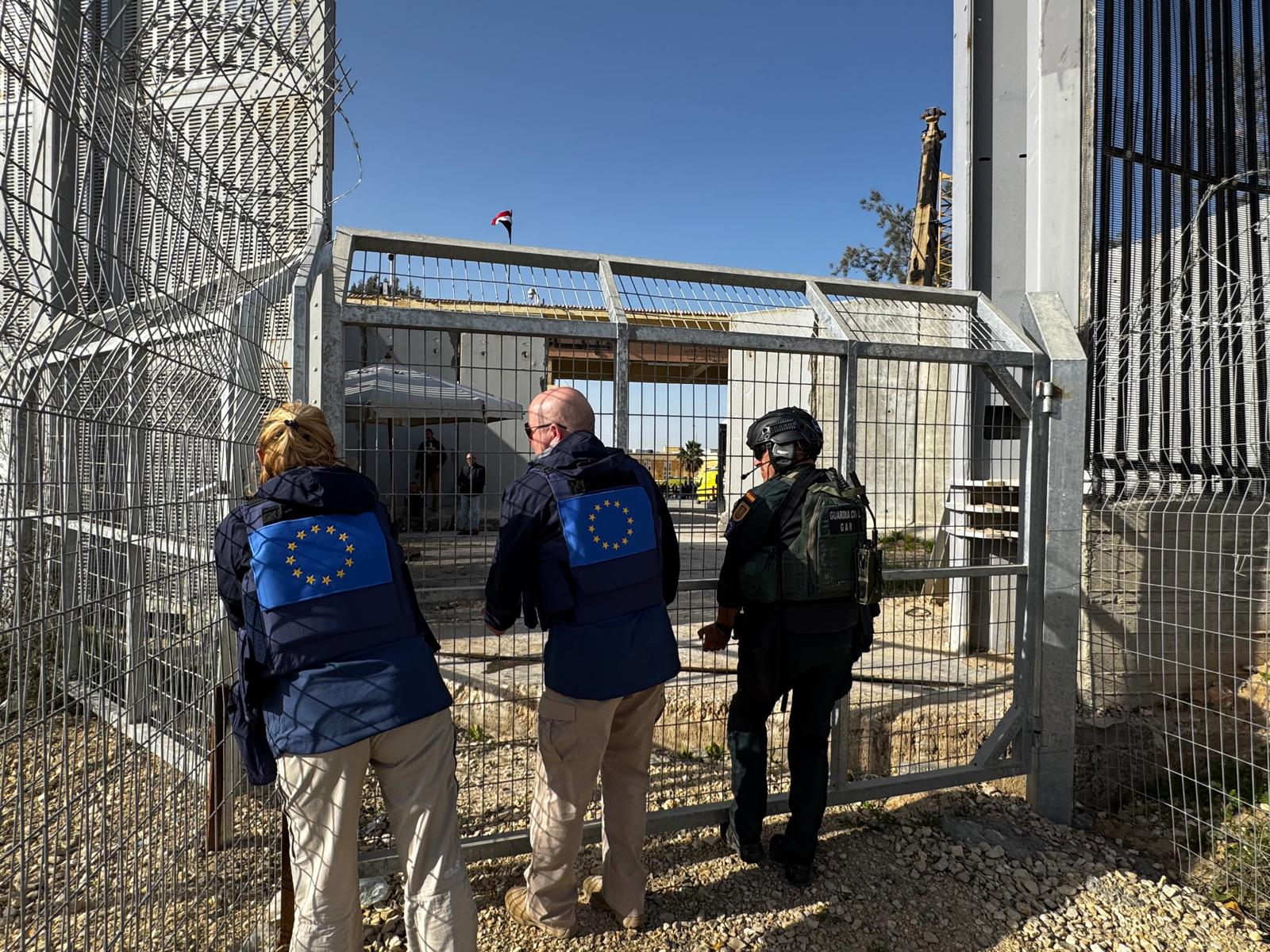
EU observatory team on February 2
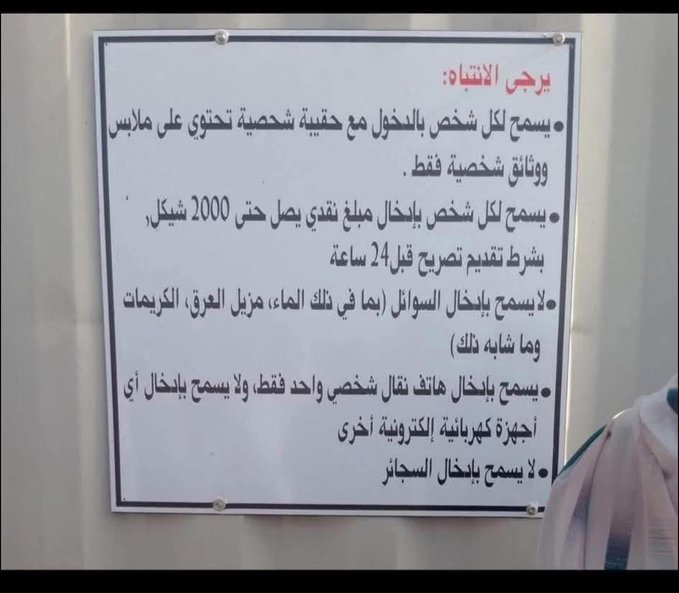
*The Israeli occupation forces issued the following directives for people returning to Gaza
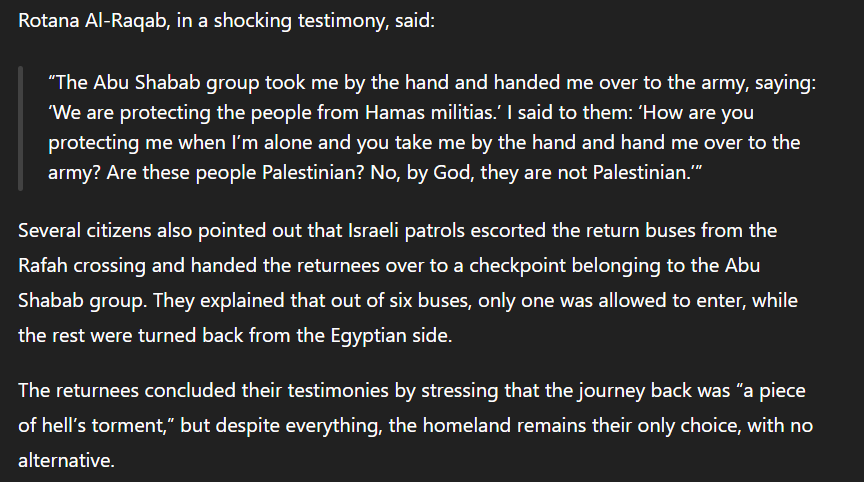
Testimony at Rafah Crossing, February 3
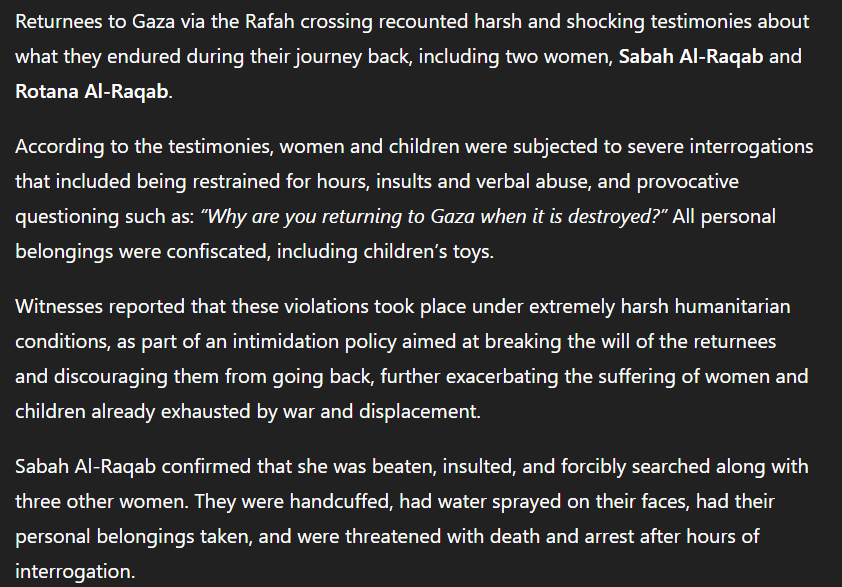
Testimonies at Rafah Crossing on February 3
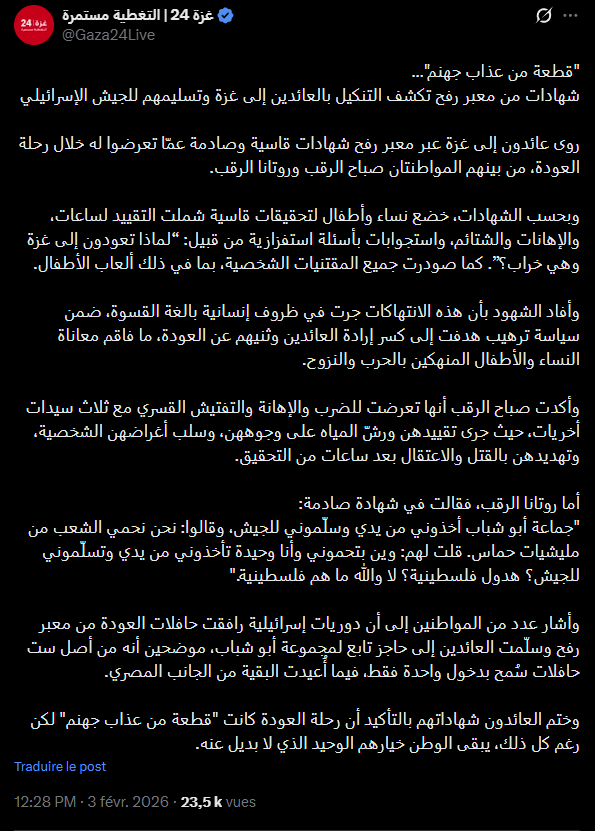
Testimonies at Rafah Crossing in Arabic (Feb 3)
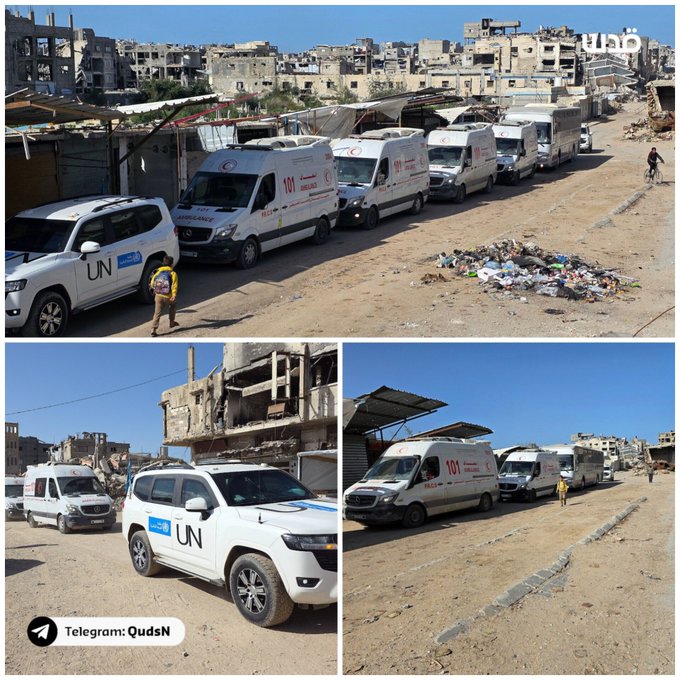
The seventh batch of patient ready to leave Gaza Feb 10
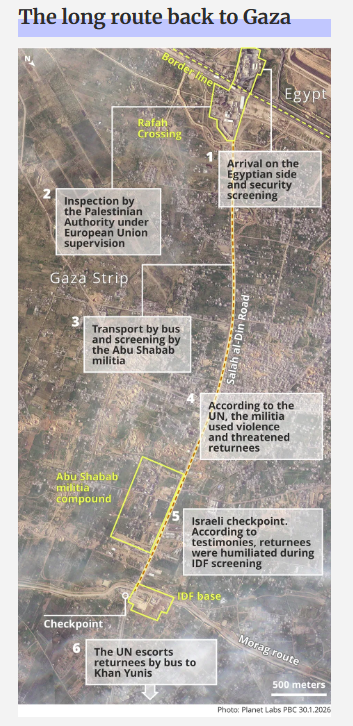
The long route back to Gaza (Haaretz Feb 11)