
Databases for Palestine logo

Town of Shuqba under demolition campaign and settlers assaults

West Bank, Ramallah, Shuqba 01 May, 2024 - 09 Jul, 2025
### **Timeline of Incidents** **On May 2, 2024**: The Israeli bulldozers demolishes two agricultural facilities of Farmers Mohammed Basem Mohammed Shalash and Ziyad Mohammed Marouf in Shuqba village). Reason: Lack of building permit; structures had stop-work orders since Nov 2021. Two weeks before the demolitions, Israeli forces had entered the targeted area, photographing the structures without providing any notice or warning of their intent to demolish them. The demolitions proceeded later without further communication. **On March 5, 2024**: Demolition of an agricultural room and three livestock shacks. Reason: Alleged unlicensed construction **On August 24, 2024**: Israeli military raid with grenades in Shuqba and nearby villages. Reason: Security operation; search-and-arrest suspected. **On December 4, 2024:** Agricultural room (12 m²) and retaining wall demolished. Reason: No permit; existing stop-work order since 2023 **On January 16, 2025**: Demolition of an agricultural structure and landfill closure. Reason: Built without permits according to Israeli authorities **On January 19, 2025**: Evacuation notices issued for 36 dunums (approx. 9 acres) of land. Reason: Declared “state property” by Israeli Civil Administration **On January 29, 2025:** Destruction of agricultural structure (~60 m²) and rainwater cistern. Reason: Lacked building permit; demolition despite prior stop-work notice **On February 11, 2025**: Demolition of an agricultural structure and tractor seizure. Reason: No permit; part of wider demolition campaign in 2024 **On February 20, 2025**: Israeli military raid—youth injured by live fire; shop searches and tear gas. Reason: Security operation; raids for suspected militants or weapons **On May 13, 2025:** Israeli bulldozers demolished one inhabited two-story home (approximately 250 m²) belonging to Yaqoub Hamida Qadah in Shuqba. Reason: Construction was deemed “illegal” by Israeli authorities—lack of an approved permit. Other reports from IMEMC note that this followed the demolition of four additional homes in Shuqba earlier that day; OCHA’s update confirms demolitions reported in Shuqba on May 14 **On April 8 2025** – Demolition (agricultural room near annexation wall) Israeli forces razed a 60 m² agricultural room in Bayt Nuba, adjacent to Shuqba, citing proximity to the annexation wall in Area C. Official reason: Illegal construction within restricted buffer zone. **On May 19, 2025**: Destruction of a two‑story house (Ibrahim Abdel Qader Shalash). Reason: Claimed illegal construction in Area C **On July 9, 2025:** Bulldozers razed four homes and two barns in Shuqba. Reason: Broad campaign cited as displacement effort to advance land control and Judaization ### Reasons behind these demolition raids **Administrative Pretexts**: Most demolitions are attributed to lack of building permits, often coupled with stop-work or eviction orders. Land is frequently deemed “state land” by Israeli authorities, prompting notices and removal. **Buffer-zone/security regulation:** The April demolition targeted structures near the annexation barrier (Area C), deemed illegal due to buffer-zone rules. **Broader Policy Context**: These acts are widely interpreted by rights organizations as part of a systematic approach to reduce Palestinian presence, particularly in Area C, and facilitate settlement expansion or Judaization efforts. **Security operations:** The March raid was part of broader military/population-control tactics which often involve search-and-seizure, presence near schools, and demolition orders tied to alleged security needs. Military raids involve raids, live fire, tear gas, and property searches tied to alleged security threats or anti-resistance efforts. The case of July 9, 2025, especially stands out as coordinated across multiple locations, suggesting a strategic campaign ### **Legal framework:** The actions of the Israeli authorities in demolishing Palestinian homes and agricultural structures are violations of international law and humanitarian principles, including the right to adequate housing, as protected by several international legal provisions: ~ Article 147 of the Fourth Geneva Convention: Defines the destruction and seizure of property on a large scale, not justified by military necessity, as a serious violation of the Convention. ~ Article 53 of the Fourth Geneva Convention of 1948 :prohibits the destruction of property, as this article states the following: “Any destruction by the Occupying Power of real or personal property belonging individually or collectively to private persons, or to the State, or to other public authorities, or to social or cooperative organizations, is prohibited, except where such destruction is rendered absolutely necessary by military operations.” ~ Article 33 of the Fourth Geneva Convention: “States that no person can be punished for an offense they have not personally committed”. ~ Paragraph (g) of Article 23 of the Hague Convention (1907): Warns against the destruction or seizure of enemy property unless justified by military necessity. ~ Article 17 of the Universal Declaration of Human Rights (1948): States that "No one shall be arbitrarily deprived of their property."

Attacks and pogroms on Khirbet al-Tawil

West Bank, Nablus, Khirbet al-Tawil 15 April, 2024
At least 2 martyred
Khirbet al-Tawil is a small Palestinian rural hamlet located east of Aqraba, in the Nablus Governorate in the occupied West Bank, on the slopes overlooking parts of the Jordan Valley area. It lies in Area C, which is under Israeli civil and military control under the Oslo framework. Khirbet al-Tawil appears frequently in reporting because of issues involving demolitions, land access, military-zone designations, and nearby settlement activity. **On April 15, 2024:** Roughly 50 armed settlers attacked Khirbet al-Tawil. According to local officials, shots were fired during clashes. Two Palestinians — identified in reports as Mohammed Bani Jame and Abdulrahman Bani Fadel/Bani Fadl — were killed, and others were injured. Reuters and other reports described this as part of a wave of retaliatory settler attacks after the killing of an Israeli teenage shepherd. **On July 11, 2024:** Israeli authorities demolished agricultural structures and sheep pens in Khirbet al-Tawil. While not itself described as a settler assault, documentation linked these measures to wider pressure on shepherd communities already facing settler attacks and displacement risks. **On July 3, 2025:** Israeli settlers established new illegal outposts in the Khirbet al-Tawil/Aqraba area, including mobile homes and embarked on leveling and bulldozing the area around them. **On July 9, 2025:** Settlers attacked Khirbet al-Tawil, injuring eight Palestinians. The Palestine Red Crescent Society teams transported "three cases of live bullet wounds to the legs resulting from the settler attack on Khirbet al-Tawil" to hospitals, the humanitarian organization said in a statement. In a later statement, the Red Crescent said its teams treated "five additional injuries, including one child, caused by beatings from settlers." **April 13, 2026,** Settlers are building a (new) outpost near the village homes with the aim of expelling the families and taking over the houses and privately owned land. According to testimony, last night the outpost residents harassed people in their homes and stole a solar panel. A soldier or someone impersonating a soldier, wearing military uniform and carrying Israeli army-issued weapons, was together with a settler.

Palestinian bus driver stabbled by settler in Deir Qadis

West Bank, Ramallah, Deir Qadis 25 March, 2024
On March 25, 2024, on Sunday evening, Jerusalemite bus driver Ahmed Abu Al-Hawa was stabbed by settlers in the Kiryat Sefer settlement, near Ramallah, amid tensions over the Gaza conflict and Al-Aqsa restrictions. He was hospitalized for treatment. The attack was one of many racist assaults on Jerusalemite bus drivers, with no action taken by occupation authorities. A video showed blood on the bus where Abu Al-Hawa was working. **Sources :** [1](https://www.arab48.com/%D8%A7%D9%84%D8%A3%D8%AE%D8%A8%D8%A7%D8%B1/%D8%A3%D8%AE%D8%A8%D8%A7%D8%B1-%D8%B9%D8%A7%D8%AC%D9%84%D8%A9/2024/03/24/%D9%81%D9%8A%D8%AF%D9%8A%D9%88-%7C-%D8%A5%D8%B5%D8%A7%D8%A8%D8%A9-%D8%B3%D8%A7%D8%A6%D9%82-%D8%A7%D9%84%D8%AD%D8%A7%D9%81%D9%84%D8%A9-%D8%A7%D9%84%D9%85%D9%82%D8%AF%D8%B3%D9%8A-%D8%A3%D8%AD%D9%85%D8%AF-%D8%A3%D8%A8%D9%88-%D8%A7%D9%84%D9%87%D9%88%D9%89-%D8%B7%D8%B9%D9%86%D8%A7-%D9%85%D9%86-%D9%82%D8%A8%D9%84%D9%85%D8%B3%D8%AA%D9%88%D8%B7%D9%86%D9%8A%D9%86) [2](https://imemc.org/article/israeli-colonizer-stabs-a-palestinian-bus-driver-near-ramallah/)

Avraham ben David Assassination

West Bank, Gush Etzion 21 March, 2024
Avraham ben David was a 63 year old Palestinian Jew who was murdered by the Israeli army this 21th March 2024 in the West Bank, it says a lot about Israeli racism: During the 1929 riots in Hebron, Samah Zaytun's grandfather saved 25 Jews from the massacre. Samah was so moved by his grandfather's story that he decided to convert to Judaism. He attempted to follow the official Israeli conversion process, but was refused, as the authorities refuse any such request from Palestinians. He tried to insist, but without success. Eventually, he managed to be accepted into a conversion program led by a renowned rabbi from Bene Beraq. After a long process, he was declared Jewish and his name was changed to David Ben Abraham. The PA detained him for 58 days (I'm not sure what the charge was, but I assume it was suspicion of collaboration). He was beaten and mistreated during his detention. After his conversion, he hoped to be accepted as an Israeli citizen. After all, he was now officially Jewish. He even continued to study Judaism in Jerusalem. But not only did the State of Israel refuse to grant him citizenship, he could not even obtain an entry permit to Israel or a work permit. He was waiting at a bus stop near the settlement of Elazar in Gush Etzion today. Israeli reserve soldiers suspected him and searched him. After finding a knife in his bag, probably for self-defense, a soldier shot him dead. "In the meantime, an IDF investigation into the matter was opened, and the reserve fighter Shira was questioned under a warning. The IDF stated that "during an operational activity, an IDF force fired at a Palestinian who aroused his suspicions at Elazar Junction in the Etzion Brigade, an injury was detected and later the death of the Palestinian was determined. Immediately upon receiving the report about the serious incident, the military attorney's office ordered the opening of an investigation by the military police." On behalf of Capt. (resp.) Mia Katz and Lt. Yasmin Younes representing the soldier on behalf of the military defense, it was stated that "this is an outstanding soldier, who was recruited to serve in the reserves from the beginning of the war, and only recently received a badge of distinction for his heroism in thwarting the stampede attack that took place about three weeks ago in Gush Etzion." According to them, "even in the alleged incident, the soldier acted with determination and we have no doubt that the investigation will clarify the sequence of events and the case will end with another badge of honor that will be awarded to the soldier." [Source 1](https://www.ynet.co.il/news/article/hym4dpy0t) [Source 2](https://x.com/ireallyhateyou/status/1770787765216551218)

Journalist Rula Hassanein arrest and unlawful detention

West Bank, Bethlehem 19 March, 2024
Rula Hassanein, a 29-year-old Palestinian journalist, has gained international attention due to her recent detention by Israeli forces and the severe impact it has had on her family, especially her young daughter. **Hassanein was arrested on 19 March 2024, during a raid on her home south of Bethlehem in the occupied West Bank.** Her detainment is part of a broader trend of increased arrests of Palestinian women—many of whom are journalists, activists, and mothers—under the charge of "incitement," particularly as tensions have escalated since the Gaza conflict began in early October. During the raid, Hassanein was reportedly handcuffed, blindfolded, and taken from her home despite her pleas to bring Elia with her due to the infant’s reliance on breastfeeding. Elia quickly became dehydrated following her mother’s arrest and required urgent intravenous nutrition. On July, Despite the court order for the release of journalist Rula Hassanein weeks ago, Israeli forces refuse to release her to this date. ### Baby's Health Needs: Rula gave birth to twins, Elia and Youssef, last year. Youssef tragically passed away three hours after birth. Her surviving daughter, Elia, required intensive care in an incubator for her first 40 days and still suffers from health issues related to her premature birth : Elia has a weakened immune system, which causes ulcers on her hands, feet, and mouth, making it challenging for her to feed. Due to these issues, she depends entirely on her mother’s breast milk, which has caused significant distress and health complications since her mother’s detention. Elia became dehydrated after her mother’s arrest and required intravenous feeding. Hassanein’s request to bring Elia to prison was denied by Israeli authorities. Her husband, Shadi Brejiya, describes the traumatic experience for their daughter, who was left screaming in distress after her mother’s removal. ### Rula detention conditions and health risks **Prison Conditions:** Initially taken to an army camp, Hassanein was later transferred to the Hasharon and then Damoun prisons, where conditions are poor. Reports from her family detail her sleeping without mattresses or blankets and surviving on one cold, insufficient meal per day, no access to essential medications for her chronic kidney disorder. Her sister, Hadeel, reported her appearance of exhaustion during her brief court appearance, where family members were prevented from interacting with her. **Chronic Health Issues:** Rula herself has battled a chronic kidney condition called "minimal change disease" since 2017, which requires her to receive regular medical attention and medication. The Israeli authorities denied her request to bring essential medications with her upon arrest. ### Broader Implications of Her Arrest Rula Hassanein’s arrest is part of a concerning surge in detentions of Palestinian women, especially journalists, on incitement charges. Many organizations have pointed out that the criteria for "incitement" are broad and often applied to social media posts that express political opinions. Her case reflects the growing number of Palestinian detainees held on administrative detention, a practice in which detainees are held without charges, subject to indefinite renewal. ### Escalation in Arrests of Palestinian Women: The Palestinian Prisoners Society (PPS) reports a significant increase in the arrests of Palestinian women—journalists, activists, and mothers—on incitement charges. Many women face "administrative detention" where detainees are held without formal charges or trials, often for extended periods. Source [1](https://lithub.com/why-american-journalists-should-be-outraged-about-the-dozens-of-palestinian-journalists-jailed-in-israel/) [2](https://www.middleeasteye.net/news/israel-wont-release-palestinian-journalist-sick-baby-reliant-breast-milk)

Mosab Haniyeh: sexually tortured to death

Gaza, Khan Younis, Hamad City 01 Mar, 2024 - 05 Dec, 2025
At least 1 martyred
**On February 25**, in a joint statement,the Commission of Detainees and Ex-Detainees Affairs and the Palestine Prisoner’s Society (PPS) confirmed that the Israeli occupation authorities had informed them of the death of Mus’ab Hani Haniyeh, 35, on 5 January, in Israeli custody. Haniyeh, a father to a nine-year-old child, was arrested in Hamad City on 3 March last year. According to the statement, he had no known serious health conditions prior to his detention. The Israeli army in a response confirmed Haniyeh’s death in January but made no mention of the cause. “The occupation indicates that an investigation is underway in an attempt to evade any international accountability,” the joint statement added. Prisoner advocacy institutions denounce that : - Prisoners endure systematic acts of torture, food deprivation, deliberate medical neglect, sexual abuse, and medical experimentation that lead to serious and fatal illnesses. The Commission for Prisoner Affairs and the Prisoners’ Club hold Israel fully responsible for the assassination of Musab Haniyah and call on the international community to take immediate action against Israel's war crimes. - A deliberate Israeli strategy of concealing and manipulating information regarding the fate of detainees. The occupation systematically refuses to return the bodies of murdered prisoners, making any independent verification of the circumstances of their deaths impossible. - Prisoner rights organizations warn that extrajudicial executions and targeted killings of detainees are an integral part of Israel’s war against the Palestinian people. With the death of Haniyah, the number of prisoners killed in Israeli jails since the beginning of the genocidal war has risen to 59, including at least 38 from Gaza. This is the deadliest toll ever recorded in the history of the Palestinian prisoners' movement since 1967, bringing the total number of detainees killed by Israel since that date to 296.

Kazem Zawahra: Comatose in Israeli prison

West Bank, Bethlehem, Beit Jala 22 Feb, 2024 - 27 Feb, 2025
At least 2 martyred
Past midnight on February 27, 2025, Kazem Zawahra was freed from Israeli captivity as part of the "prisoner" exchange deal. Kazem was shot in the head and abducted at the illegal Israeli Al-Zaeem checkpoint, east of Jerusalem on February 22, 2024. Kazem, along with his brother Mohammad and their friend Ahmad Al-Wahsh had carried out an armed resistance operation killing an Israeli occupation soldier and wounding eight others. Mohammad and Ahmad were killed by Israeli forces. In July 2024, the Israeli military demolished Kazem's family home and severely beat his father. While in coma, Kazem's wife was pregnant with their first child.

Abduction of medical staff at Amal Hospital in Khan Younis

Gaza, Khan Younis, Al-Amal Hospital, Southern Gaza 07 February, 2024
In early December 2023, the IDF commenced extensive military operations in Khan Younis, particularly in its western part where two of the main hospitals of the governorate are situated - Al Amal Hospital and Nassr Medial Complex. During its ground operation, the IDF attacked Al Amal Hospital,19 the adjacent headquarters of Palestinian Red Crescent Society (PRCS HQ),20 and its vicinity, resulting in damage to hospital buildings and ambulances, as well as deaths and injuries ofPalestinians. On 22 January, IDF troops besieged Al Amal Hospital and PRCS HQ, blocking the roads surrounding the hospital and preventing any movement to or from the medical facility. According to OHCHR monitoring, on 30 January, IDF troops raided the hospital’s courtyard, forcing the reported 7,000 IDPs sheltering there to leave. On 7 February, IDF vehicles positioned in front of Al Amal Hospital fired directly at the hospital, and two days later the IDF raided the hospital. During the raid, the IDF detained several medical staff, patients and patients’ companions from the hospital. Some of the medical staff later released by the IDF alleged torture and ill-treatment during their detention. While the IDF’s operation in Khan Younis was ongoing, the IDF raided the hospital for a second time, on 25 March, ordering the remaining patients and their Companions to evacuate. The IDF withdrew from Al Amal Hospital on 7 April as part of their larger withdrawal from Khan Younis. The IDF alleged that “Hamas terrorists” were operating from inside and around Al Amal Hospital and Nasser Medical Complex. 24 OHCHR was unable to verify the presence of Palestinian armed groups in the area; According to PRCS, on 25 March 2024, the IDF evacuated all PRCS staff, patients, and companions from Al Amal Hospital, while on 26 March, Al Amal Hospital was rendered out of service. Al Amal Hospital and the PRCS HQ are both situated within the same campus. Al Amal Hospital works under the supervision of PRCS, and it is one of its facilities. Al Amal Hospital and PRCS HQ are located in Al Amal neighbourhood in the western part of Khan Younis City. The hospital and PRCS HQ are located less than 500 metres from Nasser Medical Complex in the same neighbourhood. Al Amal Hospital and Nasser Medical Complex are the two hospitals serving western Khan Younis, including Al Mawasi area where many Palestinians were sheltering as the IDF repeatedly ordered those in certain areas of Khan Younis to evacuate to this area. On 31 January 2024, according to PRCS, a security guard of the PRCS HQ adjacent to the hospital and a psychosocial service volunteer were shot and killed. Two days later, on 2 February, an Israeli Air Force (IAF) drone reportedly opened fire towards the PRCS HQ, killing five Palestinians, including the Director of the Youth and Volunteers Department in PRCS, and injuring six others. The information gathered by OHCHR suggests the presence of IDF military vehicles at both the eastern and western sides of the hospital in late January and early February, encircling the hospital, and IDF dominating the hospital’s surroundings at the time of these shootings. Use of siege tactics against hospitals and associated premises In each operation on a hospital documented by OHCHR, after multiple strikes on structures in the vicinity, the Israeli military besieged the premises. The siege cut off access and isolated those insides, including patients, medical staff and IDPs, while preventing the entry of medical supplies and other necessities of life, negatively impacting individuals’ rights to health and life. The siege of Kamal Adwan hospital in north of Gaza and Al Amal Hospital in south of Gaza are two of six emblematic cases monitored and documented by OHCHR. Hospitals in Khan Younis, southern Gaza, were also besieged during intense IDF operations since early December 2023. On 22 January 2024, IDF troops began besieging Al Amal Hospital and PRCS HQ, lasting at least until the hospital was raided and forcibly evacuated by the IDF on 9 February. Prior to the siege, between 11 December 2023 and 21 January 2024, OHCHR documented at least 13 strikes on Al Amal Hospital and the adjacent PRCS HQ or in their vicinity. As of 24 January, IDF troops were located on the northern, eastern and western sides of the hospital dominating the surrounding areas, with activity including the erection of earth berms. On 30 January, PRCS announced that IDF troops had raided Al Amal Hospital’s courtyard, and that approximately 8,000 IDPs were forced to leave the hospital. On 1 February, PRCS announced that IDF troops had surrounded the hospital from all directions. On 9 February, PRCS announced that IDF troops had raided the premises of Al Amal Hospital. Due to the IDF’s siege around the hospital, between 31 January and 7 February, three patients - one infant and two older persons - reportedly died because of the cessation of oxygen.62 Al Amal Hospital was rendered out of service by 28 March, but it began partial services again on 2 May. Other violations during hospital sieges During the sieges of Al Shifa Hospital and Indonesian Hospital in November, Al Awda Hospita and Kamal Adwan Hospital in December, and Al Amal Hospital and PRCS HQ in January, live ammunition was fired at civilians, resulting in civilian casualties including medical staff, and effectively preventing civilians from moving within hospitals and their vicinity. No information available at the time of writing suggests that the victims were taking a direct part in hostilities or that the fire was directed at legitimate targets, raising serious concerns of violations of the principle of distinction. As part of its siege of hospitals, the Israel military blocked the delivery of essential medical and other supplies to these hospitals creating life-threatening shortages. This was seen with shortages of medicine as well as fuel, oxygen, and food during sieges of Al Awda Hospital and Kamal Adwan Hospital in December, and of Al Amal Hospital in January/February, reportedly causing the death of three patients. The denial of food and medical supplies to civilians trapped inside hospitals runs counter to several obligations of parties to the conflict to respect and protect medical units, which includes ensuring their unhampered functioning, the prohibition of starvation as a method of warfare, and the obligation to allow and facilitate rapid and unimpeded passage of humanitarian relief to civilians in need.101 The manner in which the sieges were conducted also calls into question the IDF’s respect of its obligation to take constant care to spare the civilian population, civilians and civilian objects in the conduct of military operations,102 while the impact of the sieges on civilians was entirely foreseeable. [Thematic Report Attacks on hospitals during the escalation of hostilities in Gaza](https://www.un.org/unispal/wp-content/uploads/2024/12/20241231-attacks-hospitals-gaza-en.pdf) [https://www.thenewhumanitarian.org/2024/02/12/inside-siege-gaza-largest-remaining-hospital-nasser-khan-younis](url)

Abduction, torture, and family massacre of Hamza Abu Halymah

Gaza, Gaza City, Rimal 05 February, 2024
At least 4 martyred
At the end of January 2024, Israeli soldier Yosee Gamzoo published a photo showing him torturing a Palestinian civilian in the Rimal neighborhood of Gaza City, in the western part of the city. The man's name is Hamza Abu Halymah, from the Shujaiya neighborhood in eastern Gaza City. He was arrested at his home by Israeli soldiers who destroyed the front door with a grenade. During the arrest, Hamza was stripped and forced to walk naked through the streets to a detention center located in a Catholic college that had been occupied by the Israeli army. While Hamza was being tortured, Israeli forces reportedly killed his father, one of his brothers, his brother’s wife, and later two of his nephews—an infant and a two-year-old child. These two children remained next to their mother’s body for two days before Israeli soldiers returned and allegedly killed them as well. Another of Hamza’s brothers had previously been killed by Israeli forces in 2014. The detention site was reportedly a Christian kindergarten and school known as “@GazaCollege”, located east of the Rimal neighborhood, on Jala Street, near the Barbari gas station. More documentation is available under the tag @GazaCollege. After the photo spread on social media, the soldier deleted the image and his Instagram account.

The killing of Hind Rajab and Layan Hamada

Gaza, Gaza City 29 January, 2024
At least 9 martyred
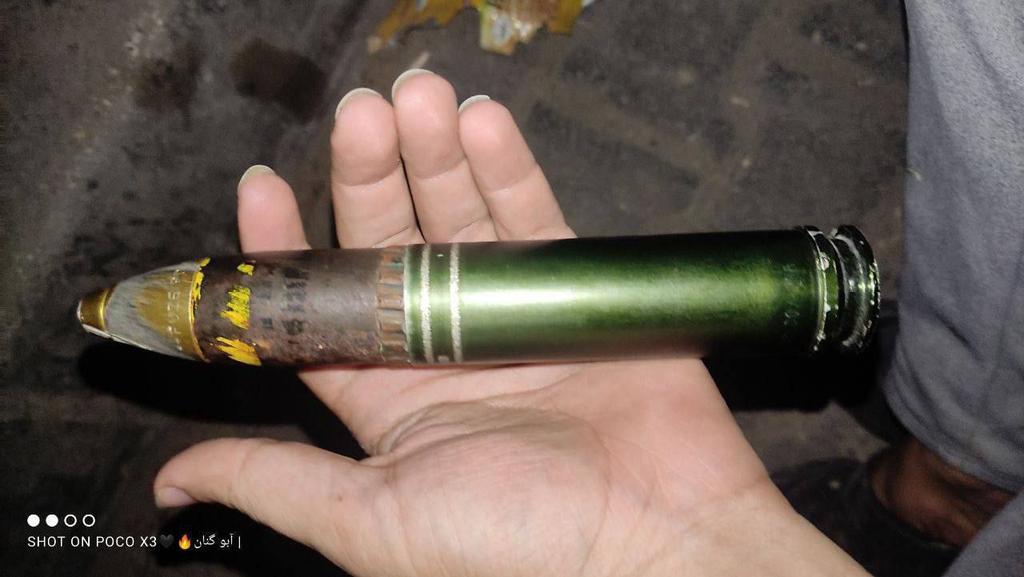
**On 29 January 2024**, a six-year-old Palestinian child in Gaza City, Hind Rajab, pleaded over the phone for emergency workers to rescue her from a car riddled with bullets. Her body was found two weeks later, on 10 February, alongside the bodies of six of her family members in the car they drove to flee their neighbourhood as Israeli forces invaded. The bodies of two Palestine Red Crescent Society (PRCS) paramedics, missing since the evening of the call when they were dispatched to rescue Hind Rajab, were discovered in their ambulance about 50 metres away. ![](https://www.hindrajabfoundation.org/uploads/1/5/8/0/15806260/2_orig.png) ## **Forensic Architecture & Earshot NGO Investigation** *Working closely with journalists from Al Jazeera’s Fault Lines, Forensic Architecture collaborated with Earshot to examine the circumstances surrounding the killing of Hind Rajab, her four cousins, her aunt and uncle, and the two paramedics who came to her rescue.* The joint investigation w/ @earshot_ngo and @AJFaultLines into the killing of 6-year-old Hind Rajab, her 4 cousins, her aunt and uncle, and 2 paramedics on 29 Jan 2024 challenges the Israeli Army’s claim that troops weren't in the area that day. Hind and 6 family members, fleeing invading Israeli forces, left in the early hours of 29 Jan from a home in the Tel al-Hawa neighbourhood of Gaza City, driving north. Hind’s mother, Wissam Hamada, witnessed shots being fired at the car from an intersection to the north of the home. Many Israeli military vehicles—in a shape and size consistent with Israeli Merkava tanks—are visible in satellite images of the intersection from that day. We mapped 335 entry holes on the body of the car, most located on the right side, suggesting the position of the shooters. Around 2:30pm, Hind’s 15-year-old cousin Layan Hamada was killed while on a call with PRCS dispatchers. @earshot_ngo analysed the recording of this call and determined that Layan was likely shot by Israeli forces at close range (13–23 metres). At 5:40pm, two paramedics, Yusuf al-Zeino and Ahmed al-Madhoun, proceeded in an ambulance to Hind, the sole survivor in the car. The ambulance was shot at upon arrival. Using satellite imagery and video documentation, we estimated the location of the ambulance when it was hit. Evidence gathered by @AJFaultLines reveals an exit hole in the ambulance’s left rear door. We reconstructed the cone of impact to determine the direction from which the ambulance was shot. This direction is consistent w/ the location of Israeli tanks visible in satellite imagery. Hind’s body was found in the car alongside the bodies of her family members two weeks later, on 10 February. The paramedics’ bodies, missing since the evening they were dispatched, were discovered in the ambulance ~50 metres away from the car. ### **Weapon used :** The investigation found that Israeli forces used multiple weapons in the attack on Hind Rajab and those with her. **M4 Assault Rifle or FN MAG Machine Gun (Mounted on Merkava Tank)** - Used to fire 64 gunshots in six seconds at close range. - Layan Hamada, Hind's cousin, was killed by rounds fired from a Merkava tank-mounted FN MAG machine gun (7.62mm rounds). - The rapid-fire rate (750–900 rounds per minute) ruled out AK-type rifles and confirmed the use of Israeli military weaponry. **120mm M830A1 HEAT-MP-T Round (Tank Shell)** - Used to destroy the Palestine Red Crescent ambulance attempting to rescue Hind. - A sabot (component of the tank shell) was found near the ambulance. - The large exit hole (23x26cm) and burn marks matched the impact pattern of a Merkava tank-fired 120mm High Explosive Anti-Tank Multi-Purpose Tracer (HEAT-MP-T) round. **335 Bullets Fired at the Kia Picanto (Family's Car)** - The car was riddled with 335 bullet holes, mostly on the right side. - Analysis suggests that Israeli forces used automatic weapons, likely a combination of M4 rifles and FN MAG machine guns from tanks or infantry positions. **Israeli Military Bulldozer (Caterpillar D9)** - The Kia Picanto was crushed, likely by an Israeli military bulldozer. - The windshield depression and tire deformation indicate it was pushed and run over. *The evidence suggests a systematic attack using Israeli military weapons, including machine guns, tank shells, and armored bulldozers, against civilians and emergency responders.* ### **Key Geolocated Points:** **Attack on the Kia Picanto (Family’s Car)** Location: Near a gas station in Gaza City, west of Tel al-Hawa neighborhood. Coordinates (Estimated): ~31.499°N, 34.445°E (31.499146838250354, 34.44498795357003) (Based on satellite imagery and mapping). Positioning Evidence: Satellite imagery from Planet Labs (Jan 29, 2024, 3:31 PM UTC) shows the car's original location before being moved. Bullet impact mapping indicates shooters positioned on the right side, likely from a Merkava tank within 13–23 meters. **Position of the Israeli Merkava Tanks** Location: Intersection north of the Kia Picanto’s position, covering escape routes. Coordinates (Estimated): ~31.500°N, 34.444°E. Positioning Evidence: Satellite images from Forensic Architecture (Jan 29, 2024, 3:31 PM UTC) show multiple Israeli military vehicles, likely Merkava tanks, positioned at the main intersection. Audio analysis of gunfire places the tank within 13–23 meters of the car. Location of the Ambulance Attack (Palestine Red Crescent) Location: 50 meters away from the Kia Picanto, near a burn mark identified in satellite imagery. Coordinates (Estimated): ~31.4995°N, 34.4455°E. Positioning Evidence: Satellite images from Feb 8, 2024, show wreckage and burn marks consistent with a 120mm HEAT-MP-T tank shell impact. Photographic evidence and Al Jazeera footage (Feb 10, 2024) confirm the ambulance's final location. ## **Tribute, memory and symbole of the struggle against impunity** Hind’s story became a symbol of Palestinian suffering and resistance, drawing global attention to Israeli war crimes. 1. The Hind Rajab Foundation was established to seek justice, while solidarity actions, including the renaming of university halls and a song by Macklemore, kept her memory alive. A year later, Gaza remains devastated, with tens of thousands killed, many buried under rubble, and severe humanitarian crises due to blocked aid. Despite international outrage, no meaningful action has been taken against Israel’s continued targeting of civilians, children, and healthcare workers. The Hind Rajab Foundation (HRF) was established to seek justice and challenge Israeli impunity. It has filed legal cases worldwide, including at the International Criminal Court (ICC) and national courts in Brazil, Spain, Austria, Germany, and Thailand, ensuring that Israeli soldiers responsible for war crimes cannot travel freely without facing legal consequences. HRF continues its mission through legal action and global awareness, urging international pressure to hold perpetrators accountable and prevent further atrocities. The world’s response to Hind’s case will determine whether Israeli war crimes go unpunished or if justice can finally be achieved. 2. *The Voice of Hind Rajab* is a 2025 docudrama directed by Kaouther Ben Hania, based on the real‑life tragedy of six‑year‑old Hind Rajab, who made harrowing emergency calls while trapped in a car under fire in Gaza. The film blends actual audio recordings of her call to the Palestine Red Crescent Society with dramatized scenes of emergency dispatchers and responders. The film premiered at the 82nd Venice International Film Festival, where it won the Silver Lion Grand Jury Prize and received an extraordinary 23‑minute standing ovation, one of the longest in the festival’s history. It has also been selected as Tunisia’s official submission for Best International Feature Film at the Oscars and garnered nominations at the Golden Globe Awards. ## **Name of the martyrs:** These victims were inside the civilian vehicle that was fired upon: 1. Hind Rami Iyad Rajab — age 5 – 6 (the child at the center of the widely reported case). 2. Layan Hamadeh – age 15, cousin (initially survived and called for help but later also died) 3. Raghad Bashar Hamadeh – age 13, cousin 4. Mohammad Bashar Hamada – age 11, cousin 5. Sarah Bashar Hamada – age 9, cousin 6. Bashar Hamada – adult male, uncle 7. Bashar Hamada’s wife – adult female, aunt These were the two paramedics from the Palestine Red Crescent Society (PRCS) who were killed while attempting to rescue Hind: 8. Yousef al‑Zeino — PRCS paramedic. 9. Ahmed al‑Madhoun — PRCS paramedic. ## **Further investigation and identification of some perpetrators** An Al Jazeera documentary documentary attributes operational responsibility for the killings to Israel’s 401st Armored Brigade, commanded by Colonel Beni Aharon. Aharon is already the subject of a criminal complaint filed at the International Criminal Court by HRF. Within that brigade, the “Vampire Empire” company—part of the 52nd Armored Battalion, led by Colonel Daniel Ella—is alleged to have carried out the attack and tampered with the crime scene. The company’s commander, Major Sean Glass, and one of its soldiers, Itay Choukirkov, a dual Israeli-Argentinian national, have both been named in separate legal actions. The 52nd Battalion, also known as Ha-Bok’im (“The Breachers”), was among the first Israeli units to enter Gaza in October 2023 and has since been involved in several of the army’s most destructive operations, including the storming of hospitals. On October 22, 2025, in a long statement on X, the Palestinian journalist Younis Tirawi respectfully disagrees with the HRF’s claim that Sean Glass or his company, “Vampire Empire,” were responsible for the killing of Hind Rajab. He notes that there is no credible evidence linking them to the incident. In January 2025, HRF approached him for assistance with the case, but he declined due to personal reasons. He warned HRF that their initial attribution to the 9th Battalion was incorrect and emphasized that legal filings must be based on verifiable facts, not inference or narrative preference. He also referred them to a public IDF statement showing that the 52nd Battalion, not the 9th, was operating near Hind Rajab’s location. Despite his advice to delay the filing to strengthen the legal strategy, HRF proceeded publicly, presenting the information as the result of a year of research. Tirawi critiques the Al‑Jazeera documentary for not independently verifying claims and for including factual inaccuracies, such as the alleged involvement of dual nationals or private military transport. He stresses that while the 52nd Battalion’s presence is established, there is no evidence linking Company V specifically to the crime. Multiple companies and units, including APCs from other brigades, were in the area, and the fatal injuries were caused by machine-gun fire rather than a tank shell. Inferring responsibility solely from the presence of a battalion is speculative and insufficient for legal accountability. Ultimately, Tirawi emphasizes that accountability efforts require precision and evidence that can withstand scrutiny in court. Speculative or emotionally compelling narratives risk misattribution and could undermine the credibility of broader justice efforts. He supports full public, legal, and ethical accountability for Hind Rajab’s killing, her family, and the paramedics, but insists that conclusions must be based on verifiable evidence, not inference or narrative convenience.

The details for each video come from social media. None of it has been verified.