
Genocide .live

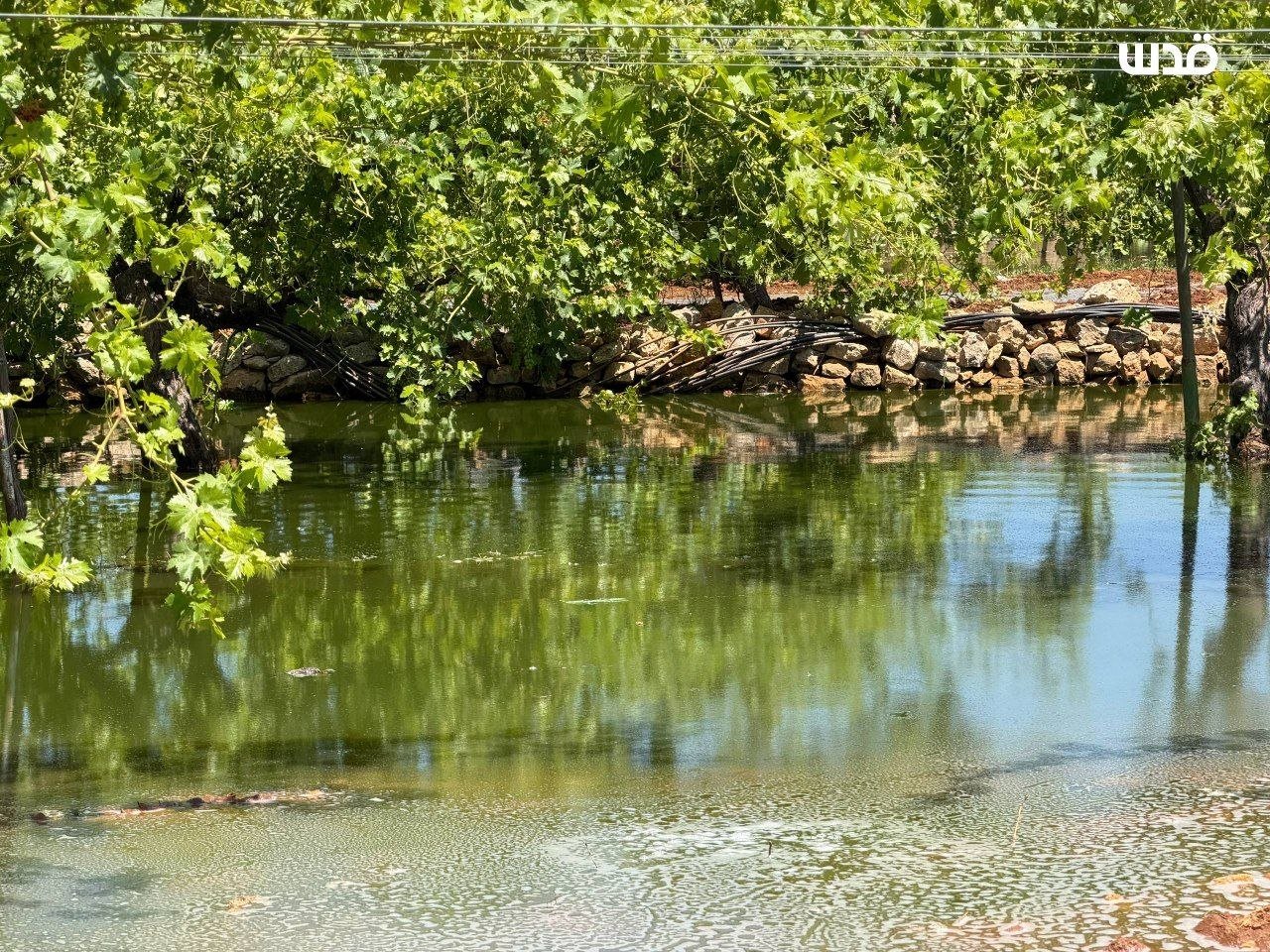
Beit Ummar under settler attacks and land theft
West Bank, Al-Khalil/Hebron, Beit Ummar
Beit Ummar is a Palestinian town located about 10 km north of Hebron in the southern West Bank. Its strategic location, near Israeli settlements and along Route 60—the main north–south highway connecting Israeli settlements and Palestinian areas—has made it a focal point of land disputes, military control, and repeated tensions.
Following the 1995 Oslo II Accord, Beit Ummar’s lands were divided into Area B (Palestinian civil control with Israeli security control) and Area C (full Israeli administrative and security control). The town has faced extensive land restrictions due to its proximity to the settlement of **Karmei Tzur** and Route 60.
Settler-related incidents reported by human rights organizations include property damage, attacks on homes and vehicles, and agricultural harm. Beit Ummar’s economy relies heavily on agriculture, especially grape vineyards and olive groves, but farmers have reported tree uprooting, restricted access to farmland, and intimidation that affects their livelihoods.
The town has also been affected by environmental damage linked to wastewater and sewage runoff from nearby settlement of Kfar Etzion. Reports by organizations such as the Norwegian Refugee Council have documented pollution in areas including Wadi Shakhit, where contaminated water has damaged agricultural land, harmed olive trees, and reduced farmers’ income.
The Israeli military maintains a strong presence around Beit Ummar, including checkpoints, watchtowers, and road restrictions aimed at securing Route 60 and nearby settlements. The town’s approximately 17,000 residents experience frequent raids, arrests, and clashes during protests or military operations. Over the years, several residents, including minors, have been killed during confrontations with Israeli forces.
**Timeline of the events:** *(Ongoing)*
**On June 26, 2026**, around 23:00, a group of settlers from the Etzion colony pumped wastewater (sewage) from inside the colony to citizens’ agricultural lands in the town of Beit Ummar;
**On November 23, 2025,** Israeli forces bulldozed Palestinian land near Beit Ummar to expand Karmi Tzur settlement.
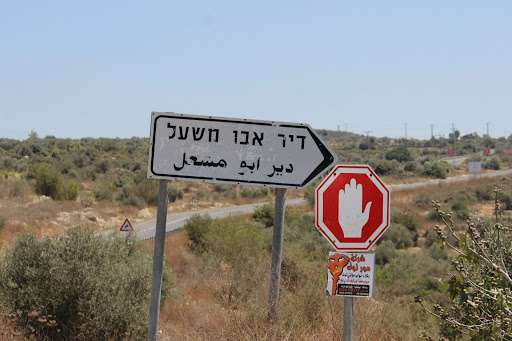
Settler attacks on Deir Abu Mashal community
West Bank, Ramallah, Deir Abu Mash'al
## **2026**
Since the start of 2026, Palestinian communities across the occupied West Bank are facing an intensifying combination of military restrictions, settler attacks, land seizure efforts and mounting displacement pressures, according to local officials, rights groups and recent Israeli media reports. A report published by the Israeli newspaper Haaretz revealed that Israeli authorities are working on regulations that would effectively legalize so-called “settlement farms” established across occupied Palestinian territory. The report noted that 103 such settlement farms have been established since 2023.
**June 10, 2026,** Israeli settlers established a new outpost on privately owned Palestinian land in the village of Deir Abu Mashal.
Hamas official Mahmoud Mardawi praised residents of Deir Abu Mashal, northwest of Ramallah, for confronting an attempt by Israeli settlers to establish a new settlement outpost on the village’s land, which sparked clashes with Israeli forces and settler militias.
**June 11, 2026,** Israeli settler erected a new outpost, a tent, on Palestinian-owned land. A group of colonists broke into the Al-Qarana hill area south of the village and set up a colonial tent on the site, only days after a similar structure had been removed.
**June 13, 2026,** Residents said settlers had re-established a tent at the same site on Friday morning, only days after it had reportedly been removed following a court decision, which villagers viewed as another attempt to establish a permanent settlement outpost on their land. Illegal settlers armed with clubs, knives and firearms attacked Palestinians working on agricultural land in an area known as Al-Mazar, in the Talat al-Qaran’e area south of Deir Abu Mash’al. The settlers first opened fire toward a group of young men before surrounding them and carrying out physical attacks using clubs and sharp objects. Four Palestinians were injured in the assault and one victim suffered severe head and facial injuries and remains in intensive care after sustaining skull fractures. According to Jamil Mousa, head of the village council, residents had dismantled the outpost and removed an Israeli flag before coming under attack by settlers and Israeli forces. He described the village as facing pressure from all directions. “We are surrounded from all four sides.".
The four Palestinians injured are from the same family. One seriously, in a settler attack northwest of Ramallah. One of the injured, Sanad Zahran, said a vehicle carrying settlers stopped near a group of residents working on their land and that the settlers then approached them. According to his testimony, when the Palestinians tried to return to their vehicle, the settlers "opened fire with live ammunition" and then attacked them with "batons, stones, axes, and sharp tools." Zahran said the assault continued until the victims "lost the ability to move," after which the attackers allegedly stole their mobile phones before leaving the area. The attack occurred hours after residents had dismantled a settler outpost erected on village land. Earlier, Israeli forces had entered the village during Friday prayers and attempted to prevent residents from reaching the area to protest the outpost, while firing large amounts of tear gas during ensuing confrontations.
Settler attacks on Khirbet Al-Markaz
West Bank, Masafer Yatta, Al-Khalil/Hebron, Khirbet al-Markaz
Khirbet al-Markaz (Al-Mirkaz) is a Palestinian shepherding community in Masafer Yatta, south of Hebron. Located within Israel's declared Firing Zone 918, it has faced repeated demolition threats, movement restrictions, and the risk of mass displacement alongside other Masafer Yatta villages.
In 2022, Israel's Supreme Court upheld eviction orders affecting several Masafer Yatta communities, including Al-Markaz, putting more than a thousand Palestinians at risk of displacement.
Access roads to Al-Markaz have periodically been blocked by Israeli forces using dirt mounds and gates, restricting movement.

Ethnic cleansing and annexation of Bedouin communities in Khan al-Ahmar
West Bank, East Jerusalem/Al-Quds, Al-Khan Al-Ahmar
The Bedouin community of Khan al-Ahmar, east of occupied Jerusalem, has been under threat of demolition and displacement for many years, following Israeli policies that designated the area as a closed military zone after the 1967 occupation. Over time, the surrounding land was progressively developed into major settlements such as Ma’ale Adumim, Kfar Adumim, and Alon, as part of a broader settlement expansion in the area.
In 2018, plans to demolish the village and relocate its approximately 320 residents gained major international attention. Strong opposition from the EU and UN, which warned that forced displacement could constitute a violation of international law, and a way to divide geographycally the West Bank in two, helped delay the execution of the demolition orders.
In the years that followed, pressure on the community continued through restrictions on construction, access to grazing land, and livelihood constraints, while settlement expansion in the surrounding area persisted. The site remained central to the so-called “E1” strategic corridor, intended to link settlements around East Jerusalem and further isolate it from the rest of the West Bank.
Since 2025, Israeli authorities have intensified measures around the community, including the establishment of a new settlement outpost near Khan al-Ahmar’s school. At the same time, ultranationalist Finance Minister Bezalel Smotrich renewed efforts to advance evacuation plans, framing them within broader regional settlement policies.
The situation escalated further after the International Criminal Court moved to seek an arrest warrant against Smotrich, in May 2026, after which evacuation orders targeting the community were reportedly renewed. Palestinian sources describe these steps as part of a wider strategy to consolidate settlement control over the Jerusalem periphery and fragment Palestinian territorial continuity between the northern West Bank and the south.
The residents of Khan al-Ahmar continue to face ongoing fear of demolition, economic pressure, and movement restrictions, while maintaining their presence on the land. The community remains a focal point in the broader dispute over the future territorial integrity of East Jerusalem and the possibility of a contiguous Palestinian state.
**On June 12, 2026**, Members of Looking the Occupation in the Eye participated, alongside other human rights organizations, in a Palestinian-Jewish protest march, to mark opposition to the occupation and support for Khan al-Ahmar, which faces an ever-greater risk of displacement - due to threats from the Minister of Occupation Smotrich. After the march, they gathered in a hospitality tent where representatives of the organizations, the head of the Khan al-Ahmar Council, Palestinian and Bedouin leaders, and Knesset members Dov Hanin (former), Ayman Odeh, and Ofer Kassif gave speeches
The same day, the Al-Baydar Organization for the Defense of Bedouin Rights reported that a group of settlers invaded the village and cut water lines which supply Bedouin communities.
Settler attacks on Wadi a-Rakhim
West Bank, Masafer Yatta, Al-Khalil/Hebron, Wadi a-Rakhim
At least 1 martyred
**On April 25, 2025,** Palestinian farmers were forced to harvest wheat weeks early due to repeated harassment by Israeli settlers and risk of crop destruction. Members of the Al-Huraini family, supported by activists, attempted to harvest their fields but were repeatedly confronted by settlers who grazed livestock on the land, damaged crops, and intimidated harvesters. Earlier attempts had already failed after settlers reportedly chased farmers away and damaged fields, including an incident where a nearby villager was shot and seriously injured. During the final attempt, settlers again interfered, but Israeli soldiers eventually arrived and ordered the settlers to back off, allowing the harvest to continue under tense conditions. Despite ongoing threats, the farmers managed to collect part of their crop, describing it as a partial success under difficult circumstances, though they remained under pressure to harvest additional fields.
**On March 7, 2026,** A settler in military uniform shot and killed a farmer after settlers invaded his family’s land and attacked his father. the local farmer Khaled Shinaran was shot by the settler Luria Luski whil his brother Tov was behind him. He died later in the same day. His brother and 4 other people were injured by settlers or further soldier raid on the family home.
[See event](https://genocide.live/event/2602)
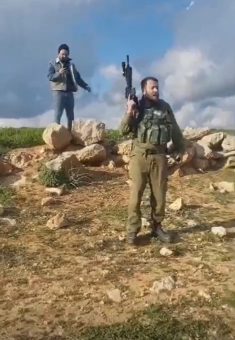
**On May 1st, 2026, at 13:10**, a group of settlers from the "Susya" colony in the Wadi A-Rakhim area in Masafer, the town of Yatta, burned a bulldozer (Bajer) and a vehicle owned by the citizen Ahmed Nasr Al-Daajneh.
**On May 18, 2026,** around 4:00 a.m., Israeli settlers set fire to a sheep pen and a traditional clay oven after infiltrating a home in the Wadi Al-Rakhim area, near the town of Yatta in the southern occupied West Bank. According to witnesses, the homeowner sustained burns to his hand while attempting to extinguish the fire.
**On July 16, 2026,** around 08:10, a group of settlers entered the Wadi Al-Rakhim area in the Masafer town of Yatta, attacked the homes of the Shenaran family, and beat a number of them, resulting in 3 of them sustaining injuries and fractures, and they were taken to the hospital for treatment. The 3 wounded are: Hudhayfah Muhammad Shanaran, Muhammad Musa Shanaran, and Mahmoud Omar Shanaran.
**On July 18, 2026**, Israeli settlers attacked Palestinian homes in Wadi Al-Rakhim, south of Yatta, Hebron, under the protection of Israeli forces, stealing three sheep. They also poisoned several of them. Israeli soldiers fired live ammunition, and a child was hospitalized after suffering severe shock. In a separate incident in As-Samu’, residents confronted settlers attempting to steal livestock and forced them to leave.
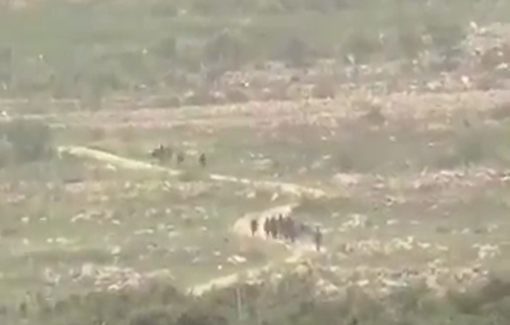
**On October 5, 2026**, in the afternoon the settlers began constructing a building adjacent to a Palestinian family's home in Wadi Rakhim, Area B with the clear intent to block access and impose a blockade on the home. Months ago, the same settler group erected an outpost right across the other side of the valley only hundreds of meters away, using it as a launchpad for violent attacks against local residents, including arson of homes and property. In response to the frequent attacks, the military recently issued a general's order barring Israelis from entering the area where the outpost was established. Nevertheless, the order is not being enforced, and the settlers remain on site. Despite repeated demolitions by the military, the outpost is routinely rebuilt within hours. The security forces' apparent inaction regarding this group reflects a policy choice that enables ongoing violence. Although the military and police received real-time reports regarding the new construction, no forces arrived at the scene.
(Report from kivsa shchora)
Settler attacks on Khirbet Abu Falah
West Bank, Ramallah, Khirbet Abu Falah
## **2026**
**On 8 March,** two Palestinians are shot dead at a close range in the head by Israeli settlers in Abu Falah, in the occupied West Bank. Another Palestinian is killed after Israeli soldiers throw smoke grenades during the attack.
**On April 16,** a new illegal outpost was established near the village of Abu Falah
**On April 17,** Israeli settlers set fire to an agricultural room in the Ezbet Abu Omar area near Abu Falah village. 3. At 18:00, the Israeli forces stormed the villages of Al-Mughayir and Khirbet Abu Falah, where confrontations took place with citizens, while they were patrolling the village of Khirbet Abu Falah. They fired stun grenades and tear gas towards citizens, under the pretext that they had been stoned.
**On April 18,** at 19:00, a group of settlers in the Al-Badoud area, north of the village of Khirbet Abu Falah, rebuilt the tent that was demolished by the occupation forces on the 17th. 04. 2026. At 22:00, a group of settlers entered the outskirts of the village of Khirbet Abu Falah, and set fire to an agricultural room (Ezbet) of the citizen Muhammad Rizq Omar Hamayel, and also opened fire randomly at the citizens, while they were trying to put out the fire.
**On April 19, 2026**, Israeli settler raided Abu Falah. Residents posted messages on social media pleading for assistance from their neighbors as the attack unfolded, with Palestinians having little means of protection against such attacks. When Israeli troops arrived at Abu Falah, they arrested residents rather than the assailants, who had already managed to return to neighboring illegal outposts. The IDF said it was looking into the matter, but did not provide further information as of Saturday evening.
At 13:40, a group of settlers were present in the area between the villages of Al-Mughayir and Khirbet Abu Falah, and attacked a citizen’s vehicle passing by the place, and also attempted to attack citizens’ homes on the outskirts of the village of Al-Mughayir.
t 14:00, the occupation forces, in the area between the villages of Al-Mughayir and Khirbet Abu Falah, fired stun grenades and tear gas towards citizens, under the pretext that they had been stoned.
At 13:55, the occupation forces stormed the village of Khirbet Abu Falah, and raided and searched a number of homes.
At 22:10, a group of settlers entered the outskirts of the village of Khirbet Abu Falah, and attacked two citizens Muhammad Farah Atta and Basil Hassan Nazih.
**On July 3, 2026**, Five international solidarity activists were injured this morning after being attacked by Israeli settler. The assault took place as residents and activists were heading to farmland in the al-Budud area, where landowners sought to access land threatened with seizure. Dozens of settlers blocked their path, attacked the group, injured an elderly Palestinian, and sprayed several international activists with pepper spray. The settlers assaulted the residents activists with clubs and pepper spray. No arrests have been made.

Settler attacks on Asira al-Qibliya
West Bank, Nablus, Asira al-Qibliya
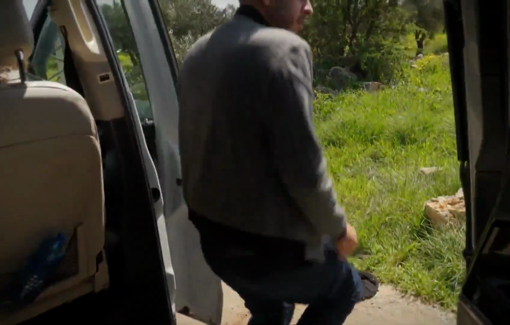
Asira al-Qibliya is a Palestinian village south of Nablus, near settlements such as Yitzhar, and has a long history of settler-related clashes and arson attacks.S ettler attacks on Asira al-Qibliya have been repeatedly documented over many years, involving arson, stone-throwing, and raids on farmland and homes, often linked to settlers from nearby outposts such as Yitzhar, with limited legal accountability reported.
Attacks on the town of Duma, Nablus
West Bank, Nablus, Duma
Duma covers a total area of approximately 18318 dunums, including 376 dunums of built-up area. It is bordered to the east by Fasayil, to the west by Qarvut and Qusra, to the north by Majdal Bni Fadil, and to the south by Al-Mughayyir, The bypass road No. (458) passes through the village land for 3360 meters, confiscating about 336 dunums under its path. The occupation controls about 130 dunums for Israel army camps. The Oslo Agreement classifies 95% of the village’s land as Area C, which is under full isreali control. The area of zones (B) is 919 dumuns, and the area of zone(C) is 17399 dunums.
**On 15 July 2024,** settlers established a new agricultural outpost on eastern lands of Duma (south of Nablus), reportedly including small structures and plantations. The site is said to have been set up near land associated with Ma’ale Efraim, under military protection.
The outpost is described as part of ongoing settlement expansion aimed at controlling nearby grazing land and restricting Palestinian access, with potential impact on hundreds of dunums of village territory.
Raids and settler attacks in Khirbet Makhoul
West Bank, Tubas, Khirbet Makhoul
Khirbet Makhoul (خربة مكحول) is in Tubas Governorate, in the northern Jordan Valley, approximately 14 km east-southeast of Tubas town in a straight line.
Outpost and settlements surrounding Makhoul.
- Ro'i (רועי), Settlement, established in 1976
- Hemdat (חמדת) Settlement, established in 1979
- Suweida outpost (منطقة السويدة), Shepherd outpost, A settler established an outpost in the nearby Suweida area, according to a Makhoul resident interviewed by Amnesty.
- Gil'ad Farm (חוות גלעד), Shepherd farm/outpost, A resident of this outpost reportedly brings large cattle herds onto Palestinian agricultural land around Makhoul.
- Goshen-Hemdat Farm, חוות גושן, Outpost, Identified in B'Tselem's 2021 mapping of new outposts. Also called Goshen Farm Chemdat by Peace Now.
- Uri Cohen Um Zuqa Farm, Outpost, Name used in B'Tselem's 2021 outpost map; Peace Now subsequently lists Um Zuka, established in 2016.
Amnesty estimates that Ro'i and Hemdat together house approximately 550 settlers.
**Amnesty also identifies two military bases:**
- Bke'ot (בקעות).
- Peles (פלס).
**Timeline of the ethnic cleansing**
Khirbet Makhoul was demolished by Israeli forces on 16 September 2013, leaving approximately 60 Palestinian residents homeless. Al-Haq documented the demolition.
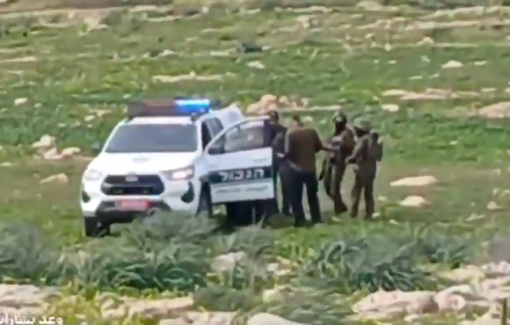
On February 13, 2026, in the northeastern West Bank, colonizers assaulted Palestinian shepherds in Khirbet Makhoul in the northern Jordan Valley.
Mahdi Daraghma, head of the al‑Maleh Village Council, said colonizers attacked residents near their tents in Khallet Makhoul.
Israeli forces also abducted Yusef Bisharat, his wife, and their son near their tents, Kamal Bani Odal, according to the head of the Tubas office of the Palestinian Prisoners’ Society
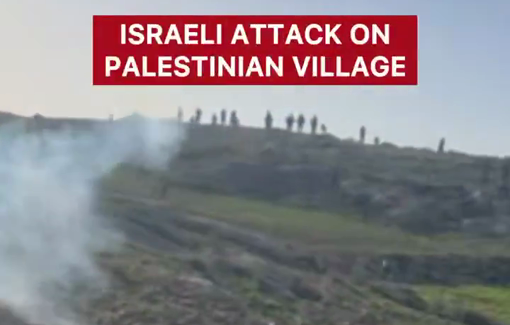
Settler terror in Rujm al-‘Ala (رُجْم العَلا) (Masafer Yatta)
West Bank, Masafer Yatta, Al-Khalil/Hebron, Khirbet Rujm al-‘Ala
Israeli terror in Khirbet Rujm al-'Ala (Khirbet Rujum Ali)
**On January 25, 2026:**
Israeli settlers assaulted a child and attempted to run over several others in Masafer Yatta, south of Hebron, on Sunday evening. Two children and a woman were evacuated to the hospital, and four sheep were stolen. According to residents’ testimonies, Shimon Atiya and other settlers invaded Palestinian lands with their livestock, they hit 13‑year‑old boy and broke his leg.
They attacked 12-year-old Salah Ismail Al-Hadra, causing bruises and other injuries. He was taken to Yatta Governmental Hospital.
Afterwards, Shimon used an ATV to chase Palestinian shepherds and struck another boy. Both children were evacuated by ambulance to the Hospital in Yatta.
In addition, one woman was hospitalized after settlers sprayed her with pepper spray
The settlers also stole four sheep after deliberatly mixing their flock with the Palestinians'.
Eventually soldiers expelled the Palestinian residents from their cultivated land using stun grenades.