
Genocide .live

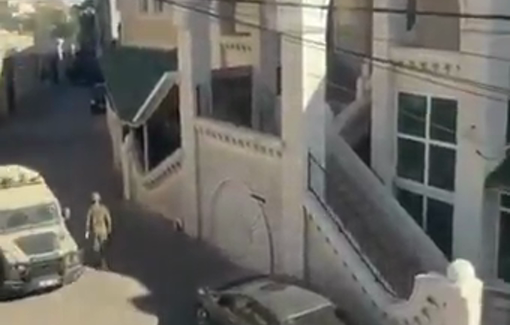
Israeli military operation in Biddu
West Bank, East Jerusalem/Al-Quds, Biddu
20 Sep, 2026 - 21 Sep, 2026
On September 20, at 15:30, Israeli forces raided Biddu, northwest of Jerusalem, following the arrest of a Palestinian man suspected of killing an Israeli settler near the Halamish settlement.
Troops searched the home of Qadri Muhammad Samara, occupied another house and turned it into a military post, and surrounded worshippers inside Abdullah bin Jaber Mosque during afternoon prayers.
They also raided several homes and detained at least 53 young men in an interrogation centre set up inside one of the seized houses. All were later released following field interrogations.
Schools, shops and offices remained closed, while residents reported assaults and a climate of fear.
According to the Biddu Mayor Nazmi Mansour, “The occupation forces have abused and assaulted a number of citizens during the ongoing raids and searches. Residents are staying in their homes, and a state of fear and anticipation prevails in the town,”.(...)"to remind people that if anyone is considering an attack against Israelis, then the whole town, the whole vicinity, the whole area will be paying the price for it,”.

Father charred to death in airstrike on his car
Gaza, Gaza City, Sheikh Radwan
19 September, 2026
At least 1 martyred
Around pm, an Israeli airstrike targeted a car on the crowded main market streets in the Sheikh Radwan neighborhood. At least three people were killed including a father whose body was largely charred in the murderous assault.
**Name of the martyr (identified):**
1. Yahya Hamdouna "Abu Abdullah"
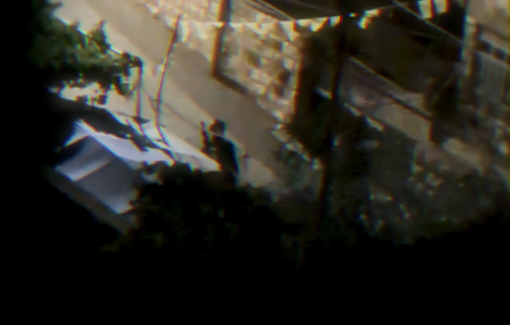
Summary execution of Ziad Muhammad Jaber, 54, in Umm Al-Sharayet
West Bank, Al-Bireh
15 September, 2026
At least 1 martyred
On September 16, 2026, the Israeli army executed a Palestinian by shooting him inside his home in the Umm al-Sharayat neighborhood in the city of Al-Bireh in the central occupied West Bank.
Citizen Ziad Muhammad Jaber was executed as a result of being shot by the Israeli forces. They fired live bullets during the storming, and Jaber, 54, was seriously injured before his death was later announced by the Palestinian Ministry of Health said in a statement.
According to Ramadan Jaber (Ziad's brother), the Israeli army stormed the family home at around 4:00 am, broke down the door and asked him about his brother Ziad, before storming the latter's home and hearing the sound of gunfire. The soldiers tied him and his daughter up in one of the rooms, then stormed another room, beat his son Omar and arrested him, while his brother Ziad remained injured inside the house for about an hour and a half, before the ambulance crews arrived. The soldiers closed the door of the room on him and his daughter and prevented them from going out or seeing his injured brother. They also confiscated their IDs and phones, and searched the house's closets and contents before withdrawing.
He described what happened to his brother as a "cold-blooded execution," stressing that he was a "very simple person," working as a laborer and not interfering in the affairs of others, and that the family members and residents of the neighborhood were surprised by what happened.
The Red Crescent crews arrived after the army withdrew. The Palestinian Red Crescent Society reported that its crews had dealt with a live bullet wound in the abdomen and thigh, and described the victim's condition at the time as "very serious." The crews performed heart and lung resuscitation on him before transferring him to the hospital where he later died.
The IDF states that Ziad Jaber has tried to grab the weapon of a soldier, But family disputes the Israeli army’s account of the shooting and says he was unarmed and not politically active.
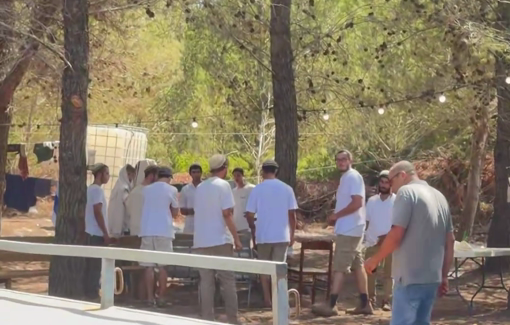
Kahanist attempt to establish an outpost in Madj al-Krum, 48 Palestine
48 Palestine, Galilee, Israel, Majd al-Krum
10 September, 2026
10–16 September 2026 — Al-Rus, Majd al-Krum, in Galilee, in 1948 Palestinian Territories, a group of young Jewish settlers, reportedly including settlers from Tekoa in the West Bank, established a large encampment on land within Majd al-Krum's municipal jurisdiction, ostensibly for livestock grazing.
They erected tents and other structures and installed water/electricity infrastructure, although no livestock was initially present. Part of the site extended onto privately owned land belonging to Majd al-Krum residents. Local residents protested while police/Border Police heavily secured the site and restricted access.
Following sustained protests and an emergency KKL meeting, the encampment was dismantled on September 15–16. KKL nevertheless maintained that grazing would continue and considered establishing a smaller camp elsewhere.
**Geolocation:**
Location: al-Rus (א־רוס), within the municipal jurisdiction of Majd al-Krum, western Galilee, northern Israel. The site is between Majd al-Krum and Gilon. The relevant plot is approximately 8.7 dunams, in Block 19035, parcel 89. According to land-registry information cited by Adalah, approximately 50% is privately owned by residents of Majd al-Krum, while the remainder is held by the Development Authority. Most of the encampment was on land managed by the Jewish National Fund (KKL/JNF), which had leased the land for livestock grazing. Crucially, KKL itself subsequently acknowledged that the implementation had gone beyond the authorization: too many tents had been erected, some structures were outside KKL land, and the encampment had been established before livestock arrived.
## **Timeline of the events**
**10 September 2026**
Residents discovered a group of young Jewish settlers establishing an encampment on the land. They put up a large tent, livestock pen and toilet structure, installed an electric pump on an old well, and connected the site to water and electricity. The group said it was there for grazing, but no sheep or goats were present. Residents told Arab48 that some of the young people said they came from West Bank settlements, and reports subsequently identified people from Tekoa.
**11–13 September**
The local council and residents publicly denounced the establishment of what they described as a new settler outpost. On 13 September, footage showed the large tents, electricity cables, furniture, water infrastructure and Israeli flag. Police/Border Police deployed heavily around the site and prevented local residents and activists from approaching the encampment.
On September 12, 2026, Israeli settlers set up large tents on lands in Majd al-Krum, in Galilee, in 1948 Palestinian Territories under heavy Israeli forces protection, while Israeli-Palestinian residents are barred from entering and protesting.
The police presence was substantial. As hundreds of Majd al-Krum residents came to protest, police and Border Police forces formed a buffer between residents and the settlers. On September 15, several protesters were detained, including activist Alon-Lee Green. N12 reported that around 500 Majd al-Krum residents participated in the protest.
**15–16 September: dismantling**
On 15 September, KKL held an emergency meeting and ordered the temporary structures dismantled. N12 reported that the decision was to remove the structures immediately.
By the evening of September 16, the encampment had been dismantled. +972 reported that the settlers and equipment were gradually removed after several days of protests, while police continued restricting access to the area. Arab48 likewise dates the evacuation to September 16.
Adalah subsequently documented the case and described the site as an illegal settler outpost established partly on privately owned Palestinian land.
**Aftermath:**
KKL chairman Eyal Ostrinsky said that the dismantling was temporary and that grazing would continue. The plan was to establish a smaller camp, farther from Majd al-Krum, on KKL-managed land, provided that an actual herd was brought to the site.
On 23 September, Arab48 reported that a new plan was being developed to re-establish the grazing site several hundred metres farther from the town, with fewer tents and local guards rather than settlers from the West Bank.
## **The Stake:**
*"The council argued that the provocative conduct of the outpost’s founders leaves no room for doubt regarding their intention to settle the area unlawfully; they even went so far as to declare that the land is “theirs, forever.” Public statements by Members of Knesset and government ministers further indicate that the outpost is part of a settlement initiative aimed at seizing land and altering the demographic balance in the Galilee through the establishment of communities and farms. The council stated that the volatile situation created by the outpost’s founders gives rise to a genuine concern regarding threats to public safety and security. The situation is reminiscent of settlers taking over land and establishing outposts in the West Bank under false pretenses."*
In a letter, 260 local leaders and Jewish and Arab social activists appealed to the chairman of the JNF demanding immediate action to prevent escalation and maintain the fabric of shared life in the Galilee. The signatories warned: *"When a group arrives in the area, establishes a compound there, and seeks, through a physical presence, to promote a nationalist agenda and determine facts on the ground, there is a real danger that what begins with a number of tents will, in the absence of a clear response, become a permanent presence and a dangerous precedent in other places in the Galilee."*
**Which settlement organization is behind this project?**
1. Hilltop Youth – the people who established the first encampment. According to the reporting, the young settlers came from West Bank settlements and belonged to the Hilltop Youth milieu. They established the encampment in the Al-Rous (منطقة الروس) area in September 2026.
- Times of Israel, 13 September 2026
- Times of Israel, 16 September 2026
2. Jewish National Fund (KKL-JNF) had leased the land for grazing, not for establishing a residential outpost. Following protests, KKL-JNF ordered the initial encampment dismantled. Its chairman, Eyal Ostrinsky, subsequently negotiated a revised arrangement.
3. HaShomer HaChadash was brought into the revised plan. According to a 23 September report, the proposal was to replace the West Bank settlers with three local members of HaShomer HaChadash, who would guard a smaller grazing site approximately 400 metres away.
4. Political context: Bezalel Smotrich publicly promoted this programme in August 2026, describing it as the Judaization of these regions.
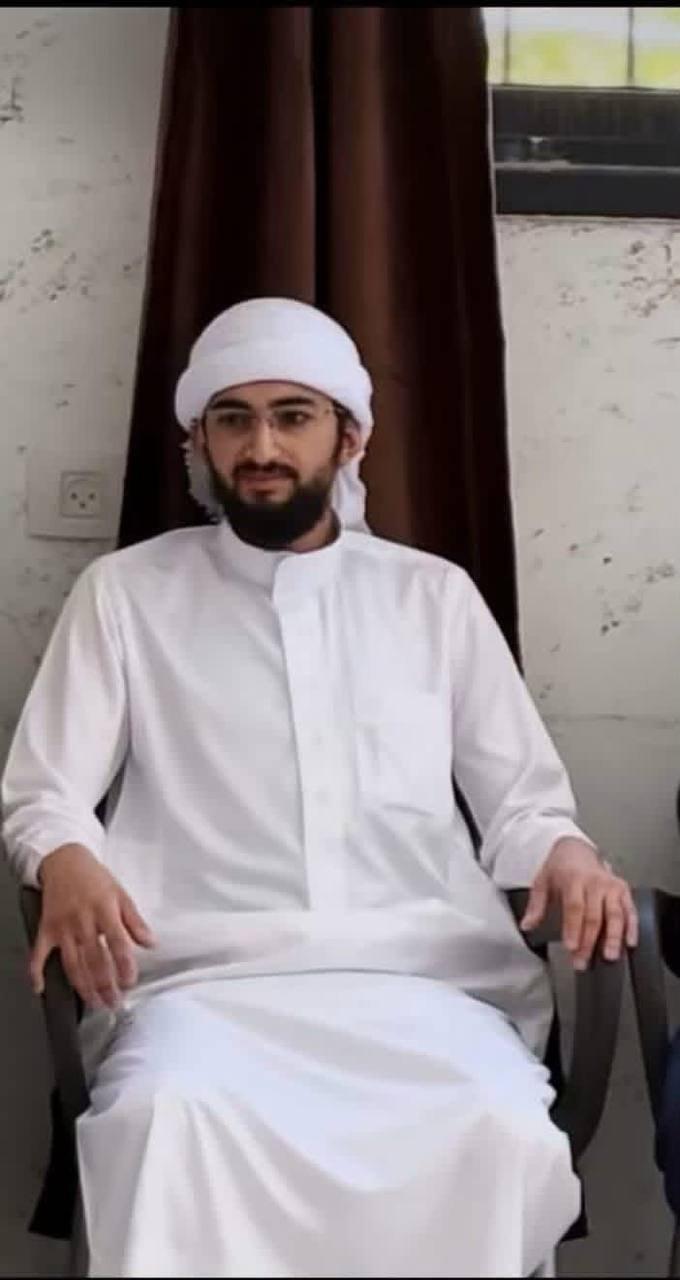
Summary execution of Abdul Karim Muhammad Khader Suleiman, 28
West Bank, Nablus, Aqraba
09 September, 2026
At least 1 martyred
On August 8, 2026, Israeli forces killed Abdul Karim Muhammad Khader Suleiman, 28, in the town of Aqraba, south of Nablus, during a military operation targeting his home in the Ad-Deeriya area, in the western part of the town.
At approximately 03:05, Israeli forces stormed Aqraba. They woke up the nephew of Abdul Karim Suleiman to use him as a human shield in order to force the family of his uncle to leave the house and surrender. But, according to this testimony, the women accepted, but he refused. So they opened fire and fired Energa shells while besieging Khader's house. A military bulldozer was brought to the scene and demolished parts of the building while Khader was still inside and surrounded.
Three hours later, Karim Abdul Suleiman emerged from the rubble and appeared at his door. The soldiers then shot him dead "in cold blood."
According to reports, Palestinian Red Crescent medics were prevented from reaching Khader, and his body was subsequently abducted by the Israeli army following his death.
**IDF version:**
The Israeli military stated that the operation was intended to arrest Khader. According to its account, he had thrown a Molotov cocktail and an improvised explosive device at troops before they surrounded the house and intensified the assault. The military claimed that soldiers subsequently shot him after he allegedly emerged from the house carrying a knife.
During the same operation, Israeli occupation forces also conducted raids in the nearby villages of Qabalan, Awarta and Yatma. The military reported that three Palestinians were detained and approximately 60 others were questioned.
**Name of the martyr:**
Abdul Karim Muhammad Khader Suleiman, 28 years old
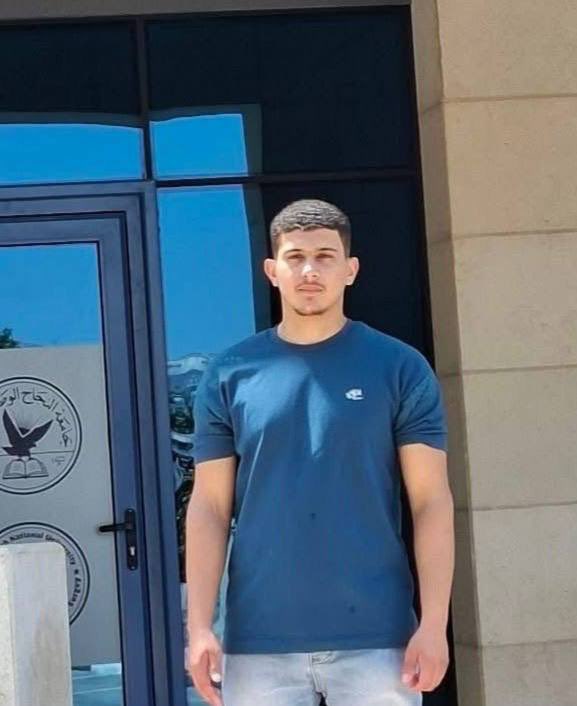
Assassination of Omar Muhammad Tubasi, 18, by settlers in Hajjah
West Bank, Qalqilya, Hajjah
06 Sep, 2026 - 07 Sep, 2026
At least 1 martyred
On September 7, overnight, a group of armed Israeli settlers entered in Hajja, east of Qalqilya in the occupied West Bank.entered/attacked the village.
Palestinian describes it as an armed settler attack, with settlers firing directly at residents, under Israeli army protection. Video from the attack captures settlers escalating the confrontation with Palestinian residents, including raising their weapon to take aim on unarmed Palestinians standing their ground.
The Palestinian Red Crescent said two Palestinians were shot, one in the head and another in the chest. The wounded were transferted at Darwish Nazzal Government Hospital.
18-year-old Palestinian Omar Muhammad Tubasi, a dentistry student at Najah University, was shot in the head and killed by armed Jewish settlers. According to Wafa, he later died at Darwish Nazzal Hospital in Qalqilya. The Palestinian Ministry of Health announced his martyrdom, adding that Omar is a second-year student at the Faculty of Medicine at An-Najah University, and a memorizer of the Holy Qur’an.
Two other Palestinians were wounded by live fire: one in the chest, reportedly seriously, and a 17-year-old in the thigh.
According to Israeli media Ynet, reported by The Times of Israel, settlers would have flown a drone over the village, residents threw stones at it, and the settlers entered to retrieve it; clashes then occurred between residents, settlers and Israeli soldiers. According to that account, IDF soldiers fired at Palestinians throwing stones. The IDF had not yet commented at the time of publication.
**Perpetrators:**
Just over a month ago, the violent settlement of Kedumim established an outpost—a so-called “farm”—called Sha’ar HaOz near the village of Hajjeh.
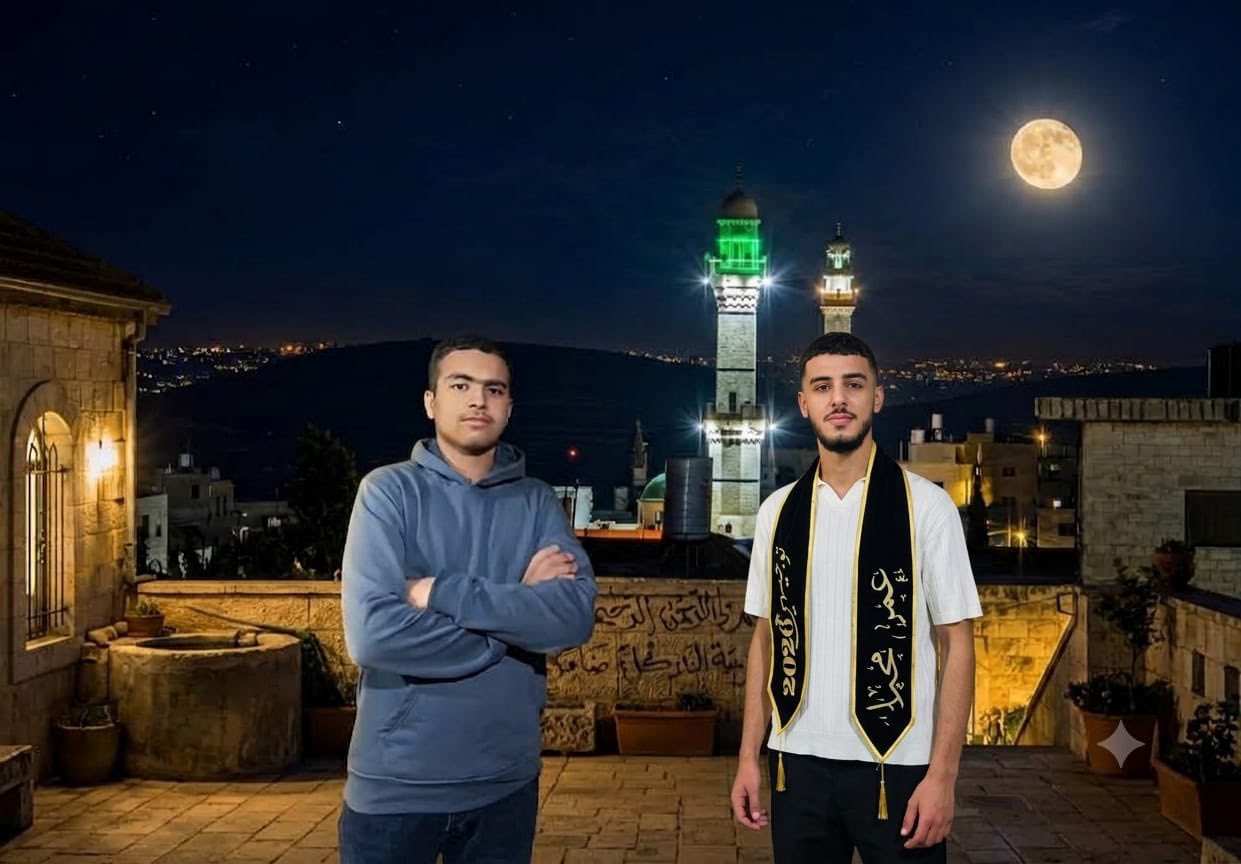
Summary execution of Khalil Abu Alia, 16, and Omar Mohammed Naasan, 19, by settlers and soldiers in Al-Mughayyir
West Bank, Ramallah, Al-Mughayyir
02 September, 2026
At least 2 martyred
On September 3, 2026, around 22:50, a group of settlers stormed the village of Al-Mughayir, northeast of Ramallah, and attempted to steal sheep from citizens’ homes.
At 22:55, Israeli forces almost immediately stormed the village of Al-Mughayir. They fired live and rubber-coated metal bullets, stun grenades, and tear gas at citizens while they were confronting the settlers, which led to the killing of two citizens, including a minor.
The Israeli settlers went near the Grand Mosque, attacked two Palestinian homes belonging to Saleh Suleiman and Shihada Kaabneh, and stole sheep.
Israeli army snipers took positions on buildings in the centre of the village. When residents confronted the settlers while they were taking the sheep, the snipers opened live fire.
Three Palestinians were reported wounded. One was shot in the neck and another in the back. Both were taken to hospital but subsequently died.
**The reported sequence was:**
1. Settlers entered the village with Israeli forces.
2. They went into the built-up centre near the mosque.
3. Two Palestinian houses were attacked/entered.
4. The settlers began taking Palestinian sheep.
5. Israeli snipers positioned themselves on rooftops/buildings overlooking the area.
6. Villagers came out to confront the settlers and prevent the seizure of the animals. Some, like Abu Alia, intervened to help their neigbours assaulted by the settlers when residents heard people inside one of the occupied houses screaming while being beaten. The witness said most villagers were outside confronting the army, while Khalil and Omar were in the vicinity of their homes.
7. Israeli forces opened live fire: Khalil Abu Alia, 16, was shot in the back, while Omar al-Naasan, 19, was shot in the chest, reportedly as he emerged from his home to help his neigborhood. Both died from their wounds.
**The Israeli military's version**
The IDF gives a markedly different account. It says troops entered the village to secure the entry of police and a civilian who was supposedly retrieving livestock belonging to Israeli civilians. According to the military, the animals were identified through distinguishing marks.
The army says a "violent riot" then developed, with Palestinians allegedly throwing stones and concrete blocks at troops. It says soldiers fired at "key instigators" and that hits were identified. The IDF says the circumstances and its handling of the incident are being investigated.
**Arrestation:**
The detainee in the village of Al-Mughayir is Omar Shehadeh Abu Alia.
**Names of the martyrs:**
1. Khalil Rasem Khalil Shehadeh, 16 years old
2. Omar Muhammad Naji Al-Naasan, 19 years old
**Statement of the Palestinian Ministry of Education and Higher Education:**
"The Ministry of Education and Higher Education condemns the killing of 16-year-old Khalil Rasem Abu Alia, a tenth-grade student at Al-Mughayyir School, and 19-year-old Omar Al-Nassan, a first-year student at Birzeit University, by Israeli settlers in Al-Mughayyir, Ramallah and Al-Bireh Governorate. The Ministry stresses that the crime is part of the ongoing escalation of attacks by Israeli settlers and occupation forces against Palestinians, particularly children, students, schools, and universities, and constitutes a flagrant violation of the right to life, security, and education."
Overnight attack on vehicle in Beita
West Bank, Nablus, Beita
02 September, 2026
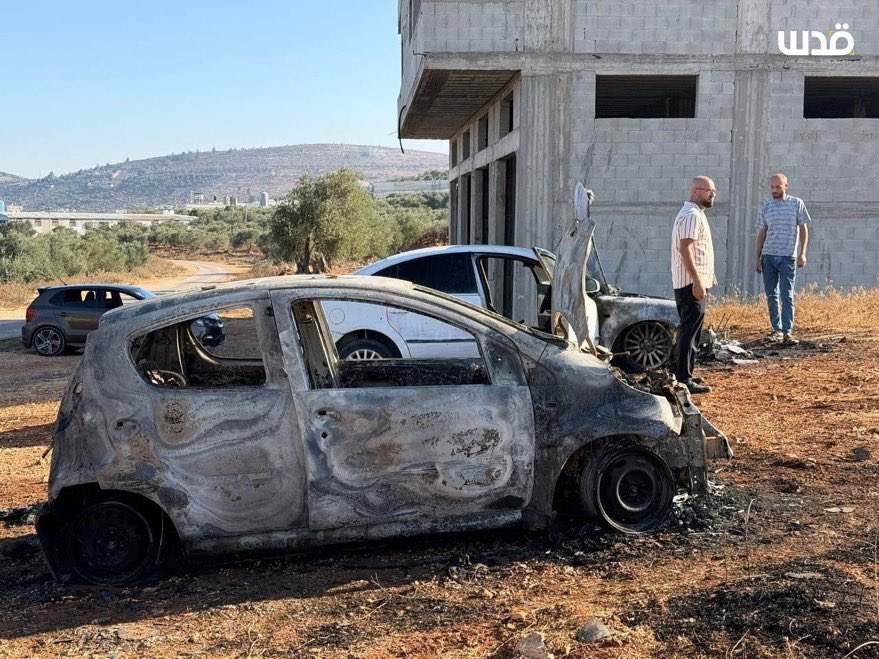
On September 2, 2026, around 2:50, a group of Israeli settlers attacked Palestinian property in Beita, south of Nablus in the occupied West Bank, setting fire to several Palestinian-owned vehicles
They entered the eastern outskirts of the town of Beita, and set fire to two vehicles belonging to the citizen Jabr Hamayel, parked in front of residents’ homes.
Security footage shows masked suspects dressed in black setting the two vehicles on fire before fleeing, and that Hebrew graffiti was sprayed on the walls of a house.
Despite this footage, no arrests was made.
Land seized in Hebron (Old City) to establish an outpost
West Bank, Al-Khalil/Hebron
31 August, 2026
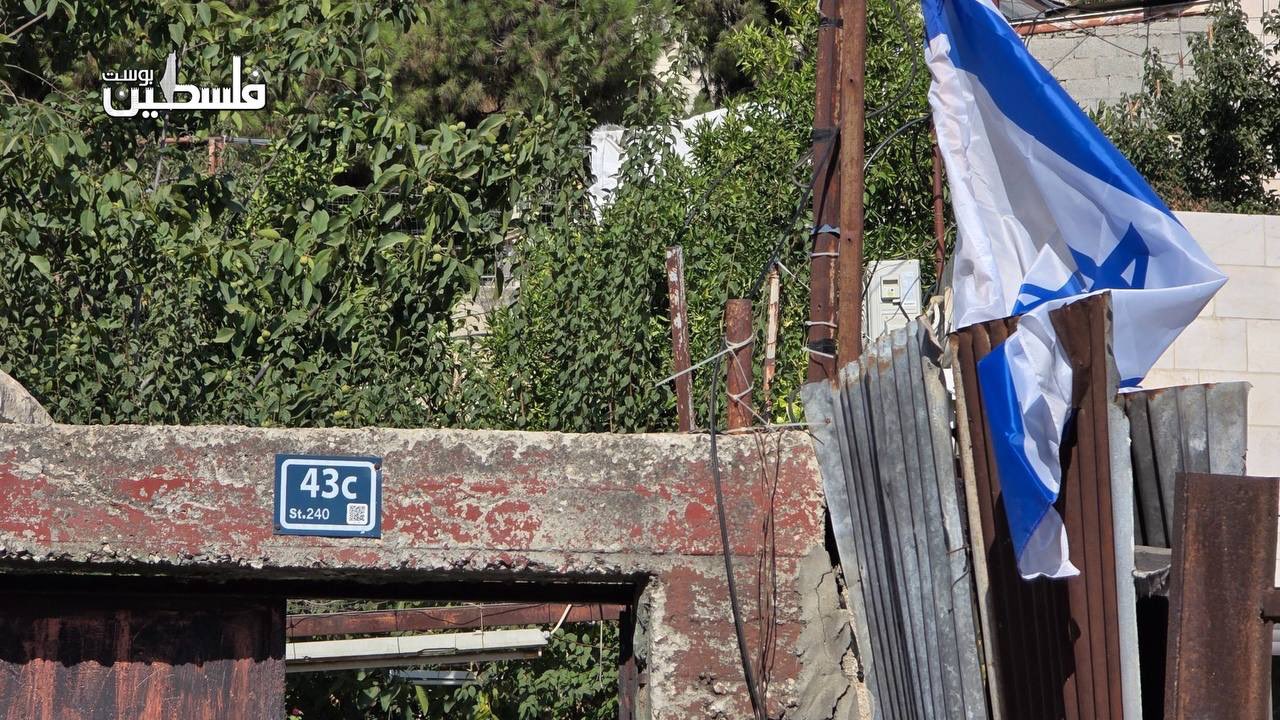
On August 31 to September 1 2026, in the Shalala (الشلالة / Shalala) area immediately adjacent to Hebron’s Old City, Israeli settlers moved into the Shalala Street area adjacent to the Old City, accompanied by Israeli forces, who established a security perimeter, in order to establish a new outpost in the heart of the city.
**On August 31, 2026 — Day 1:**
Israeli settlers arrived in the Shalala Street (شارع الشلالة) area, on the edge of Hebron’s Old City, accompanied and protected by Israeli forces. They brought an excavator and began clearing/leveling a plot of Palestinian land. Soldiers established a perimeter around the site.
A young Palestinian man was detained, handcuffed with a plastic zip tie, and forced to sit on the ground.
The two detainees in the city of Hebron are: Rajab Zigan and his son Omar.
Hebron Mayor Yousef al-Jaabari described the operation as an attempt to establish a new settlement outpost in the heart of the city. He said it was part of a broader plan to strengthen the settlers’ presence in the Old City.
**1 September 2026 — Day 2: the land-clearing continued**
The settlers brought their own machinery, forced their way into a carpentry workshop, broke its doors, and completely leveled the land next to it. Raef al-Harbawi’s family has rented the workshop for 70 years.
Israeli flags were placed on Palestinian properties and along the street. Another resident, Abu Mustafa al-Shyoukhi, said that settler provocations in the area had been continuing for more than six months, with the support of the Israeli army.
Badr al-Daour al-Tamimi, head of the Old City committee, said that settlers and the army brought bulldozers onto land they had seized by force, and considered the objective to be the establishment of an outpost that would further suffocate the area and push Palestinian residents to leave.
Resident Nidal al-Awiwi warned that the land seizure could effectively empty an entire street of its Palestinian residents, passers-by and visitors.
**Broader context:**
Hebron Mayor Yousef al-Jaabari warned that Israel aims to seize the Old City and Ibrahimi Mosque and transform its character from a mosque into a synagogue. Hebron’s H2 area, under direct Israeli military control since 1997, is home to around 40,000 Palestinians and nearly 200 settler families, living under separate movement and security regimes. The Ibrahimi Mosque itself is divided between Muslim and Jewish worshippers.
Bezalel Smotrich recently announced plans to transfer planning and construction powers at the site to Israeli authorities, while Israel’s Supreme Planning Committee subsequently approved a new building for the Shavei Hebron religious school near Beit Romano settlement. Al-Jaabari said Hebron is being targeted through settlement expansion, Judaization and property confiscation, while municipal officials are pursuing legal action despite their lack of confidence in Israeli courts.
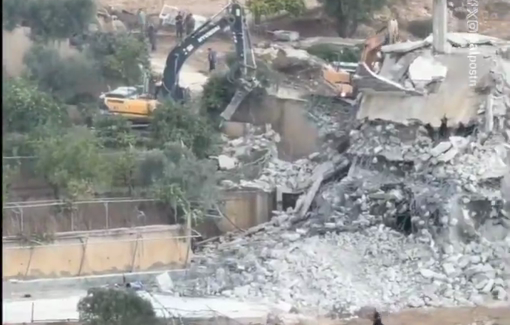
Demolition of houses in Birzeit
West Bank, Nablus, Birzeit
31 August, 2026
On Augustus 30, 2026, early in the morning, in the Ain al-Saqi area in the town of Birzeit, the Israeli forces demolished two residential buildings, each consisting of 4 floors and with an area of 250 square meters per floor, under the pretext of not having a permit. The owner is Karim Salama al-Nabali.
At 08:20, a group of settlers entered the northern outskirts of the town of Birzeit, beat and sprayed pepper gas on journalists while they were covering the press while the occupation forces demolished 2 houses.