
Genocide .live

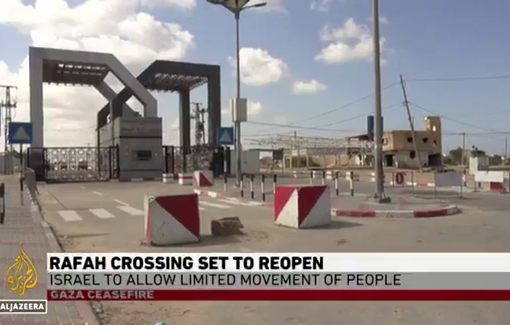
Re-opening of the Rafah crossing
Gaza, Rafah Crossing, Southern Gaza, Egypt
01 February, 2026
Re-opening of the Rafah Crossing | announcements versus reality:
The National Committee for the Administration of Gaza reiterated the start of the “experimental operation” of Rafah in both directions, limited to humanitarian cases (patients, students, family reunification). This administrative language unfolded alongside airstrikes, drone fire, and condolence houses being bombed, exposing the gap between paperwork and lived reality under israeli occupation.
## **Timeline of the events:**
**On February 2, 2026,** the Rafah border crossing — Gaza’s only border point with Egypt not controlled by Israel before the genocide — was reopened in a limited capacity after nearly two years of closure during the ongoing siege and genocide in Gaza.
The move is presented as a key step in phase two of a U.S.-brokered ceasefire agreement, supposedly intended to ease isolation and allow limited movement of people. In reality, it functions as a new tool of ethnic cleansing and an enforcement mechanism of genocide, carried out with the complicity of the United States and the international community, including EU observers.
Rafah is Gaza’s main gateway to the outside world that does not pass through Israel. It has remained largely closed since its capture by Israeli forces in May 2024. Its limited reopening is framed as enabling medical evacuations, travel abroad, and family reunifications, particularly for Palestinians stranded by war and blockade.
**Who can cross — and how**
Movement remains extremely restricted. Only a small number of Palestinians are permitted to cross each day — up to 150 toward Egypt, primarily patients and wounded individuals, and only on foot. All movement is subject to security screenings and intelligence vetting, coordinated between Israel, Egypt, and international observers. Priority is reportedly given to critically ill patients, with ambulances and Egyptian hospitals on standby.
Despite the catastrophic humanitarian situation, marked by more than two years of siege and manufactured starvation, goods and humanitarian aid are not allowed through Rafah as part of this reopening. The process focuses on people, not supplies. Stringent Israeli security conditions — including prior approvals and joint screening — severely limit access, leading critics to describe the reopening as a pilot phase rather than a genuine restoration of movement.
**Broader context**
The reopening takes place within the framework of the Trump-brokered Gaza ceasefire plan, which established the “Yellow Line” as a temporary internal Israeli military demarcation. It is also tied to broader negotiations on Gaza governance and discussions around Hamas disarmament.
In practice, Rafah functions as a controlled checkpoint, not a sovereign border. Israel controls the surrounding territory on both the Gaza and Egyptian sides, having leveled large areas to create buffer zones, military installations, and surveillance corridors. Most Palestinians remain trapped, while the reopening creates only the illusion of limited freedom of movement.
**Timeline of the events**
**On February 2,** 2026, only five patients out of 450 in critical condition were allowed to leave Gaza, according to Dr. Mohammed Abu Salmiya, director of Al-Shifa Hospital in northern Gaza City. We were informed that today only five patients will be allowed to exit with two companions through the Rafah crossing,” he said. Health authorities report that at least 1,268 people have died while waiting for medical evacuation since the crossing was closed. In total, around 20,000 patients, including 4,500 children, urgently require treatment outside Gaza.
The Rafah crossing has reopened under EU supervision (EUBAM), but movement remains tightly controlled. Palestinians returning from Egypt face hours-long delays and cannot enter Gaza directly. Israel has established a military checkpoint — the “Regavim corridor” — outside the crossing, where Israeli security forces screen identities, verify intelligence-approved lists, and search belongings. Only after passing both Rafah and Israeli military screening are individuals permitted to enter the besieged enclave.
**On February 3**: The National Committee for the Administration of Gaza reiterated the start of the “experimental operation” of Rafah in both directions, limited to humanitarian cases (patients, students, family reunification). This administrative language unfolded alongside airstrikes, drone fire, and condolence houses being bombed, exposing the gap between paperwork and lived reality under israeli occupation.
*Al Haq statement on X (February 3, 2026)*
"The alleged “opening” of the #Rafah crossing must be understood as a component of Israel’s ongoing genocide in #Gaza: despite claims of humanitarian access, only 5 critically ill Palestinians were allowed to leave Gaza through Rafah (@WHO)& only 12 were allowed to return.
Gaza’s Ministry of Health reports that approximately 20,000 Palestinians require medical evacuation, inc. 440 critical cases.
They estimate it would take years to evacuate them if the crossing continues to operate at this rate & 10 critically ill people will die every day.
Even if the reported 50 patients/day, only on foot, were permitted by Israel to evacuate, it would still take 400 days to evacuate all those currently in need of medical attention.
Through bombardment, siege & the destruction of civilian infrastructure, Israel has caused mass injury & illness in Gaza while deliberately dismantling the healthcare system needed to treat both the wounded & those with critical conditions, inc. cancer & dialysis patients.
Taken together, Israel has caused mass injury and illness through its ongoing genocide, destroyed the medical system capable of treating those affected, and then severely restricted access to urgent medical care outside Gaza.
Destruction of Gaza’s healthcare system & attacks on infrastructure as Palestinians endure winter in tents, constitutes the deliberate infliction of conditions of life calculated to bring about physical destruction & serious bodily & mental harm (Art. II, Genocide Convention).
At the same time, return is deliberately obstructed. Those who leave for life-saving treatment risk permanent displacement, while those blocked from leaving are left to die. These measures perpetuate the genocidal conditions of life and forcible transfer in an ongoing Nakba."
**The Israeli occupation forces issued the following directives for people returning to Gaza:**
"Each person is allowed entry with one personal bag containing only clothing and personal documents.
Each person is allowed to bring in up to 2000 NIS in cash (~$600), provided they submit a declaration 24 hours in advance.
Liquids (including water, deodorant, creams, and similar items) are not allowed.
Only one personal mobile phone is allowed; no other electronic devices are permitted.
Cigarettes are not permitted"
**Testimonies of the returnees to Gaza On February 3,** returnees to Gaza described severe abuse at the Rafah crossing, particularly against women and children, including prolonged detention, humiliation, harsh interrogations, and confiscation of personal belongings. Witnesses said the treatment aimed to intimidate returnees and deter them from going back to Gaza, worsening the suffering of those already affected by war and displacement. Two women, Sabah and Rotana Al-Raqab, testified to being beaten, restrained, threatened, and handed over to the Israeli army, with one accusing a local group of falsely claiming to protect civilians while cooperating with Israeli forces. Returnees also reported that most buses were turned back at the crossing, with only one allowed to enter Gaza. Despite describing the experience as *“a piece of hell’s torment,” *they emphasized that returning to their homeland remains their only choice.
**On February 5,**
L'OHCHR published a report "Patterns of ill-treatment and coercion reported among Palestinians returning to Gaza" confirming that for a third day, Palestinians returning to Gaza via the reopened Rafah crossing reported abuse and humiliation by Israeli forces. Accounts given to the UN Human Rights Office describe being detained by armed Palestinians allegedly backed by Israel, subjected to handcuffing, blindfolding, threats, theft, and then violent interrogations and invasive searches at Israeli checkpoints. Returnees also reported denial of medical care and bathroom access, coercive offers of money to leave Gaza permanently or act as informants, and treatment amounting to torture or degrading abuse. The UN warned this pattern may violate international law, discourage Palestinians’ right to return, and contribute to the ethnic cleansing of Gaza.
**On February 6**, reports indicates that only 36 medical cases from Gaza were allowed to travel by the Rafah Crossing since the re-opening of the border.
**On February 7,** The director of al-Tahrir Hospital at the Nasser Medical Complex warned that the health situation in Gaza has reached a catastrophic stage. Vital hospital departments face suspension due to destroyed equipment and severe shortages of fuel and oxygen. More than 21,000 patients are waiting to travel for treatment. The lack of cancer medications is directly leading to patient deaths. Israeli authorities continue preventing the entry of medical supplies and restricting international organisations.
**@Hakeam_ps testimony on February 7, 2026**
*"Rafah crossing is no longer just a crossing — it has become a corridor of humiliation for leaving an open prison called Gaza. A prison not only restricted by borders — but overflowing with destruction, blood, systematic oppression, deliberate injustice, and deprivation managed as daily policy. Leaving it is not survival… but a test of dignity.
Staying in it is not a choice… but a continuous punishment.
Gaza today is not only besieged… it is being punished.
Passing through it or returning to it is no longer a matter of procedure or timing but a harsh experience imposed on you entirely — where you are treated as a suspect and your dignity is tested step by step — simply because you are Gazan… for no other reason."*
**On February 8, 2026**, after full closure, Israel only allowed 11 patients— out of the 50 permitted per day out of more than 20,000 left to— to depart towards the Rafah Crossing that hasn't truly opened.
**On February 10, 2026**, The seventh batch of patients and wounded people is set to leave the Gaza Strip via the Rafah crossing to receive urgent treatment abroad.
**On February 28**, Israel reimpose total siege on Gaza, closing all crossings into Gaza, including Rafah, “until further notice.” COGAT says humanitarian staff rotations are postponed, meaning no aid personnel can enter or leave. Israel falsely claimed: “The substantial quantities of food that have entered since the beginning of the ceasefire amount to four times the nutritional needs of the population… Therefore, the existing stock is expected to suffice for an extended period.” UN says less than 170 of the daily 600 trucks have been entering Gaza drive the ceasefire began.
**On April 6, 2026,** Palestinian Red Crescent Society, reported that the World Health Organization informed the Red Crescent that it had suspended the travel of humanitarian cases, including patients and their companions, as well as the return of cases via the Egyptian side to the Gaza Strip.
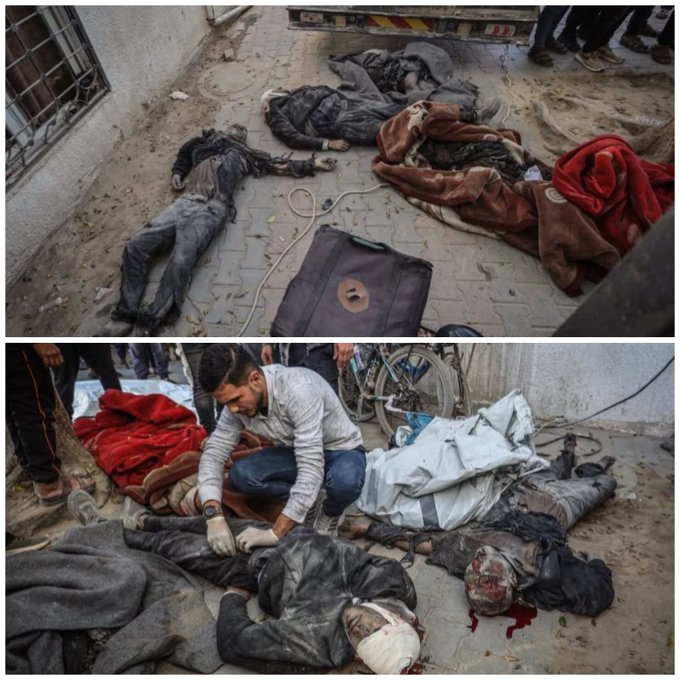
Israel bombs the Sheikh Radwan police station
Gaza, Gaza City, Sheikh Radwan
31 January, 2026
At least 14 martyred
Around 11 a.m., on January 31, 2026, Israeli warplanes fired two missiles at al-Sheikh Redwan Police Station, near Bahloul Petrol Station in al-Naser neighborhood, Gaza City. The police station had been partially repaired following the ceasefire and had resumed operations. As a result of the attack, 15 people were killed, including six civilians who were inside the station at the time and nine Palestinian police officers, among them four female officers, while others sustained injuries of varying severity
This attack demonstrates Israel’s deliberate intent to extend the cycle of killing to include civilian officers and service users, in the complete absence of any clashes.
The martyrs of female members of the Palestinian police who were martyred in the bombing of Sheikh Radwan Police Station are:
1- Najoud Yousef Al-Abd Al-Madhoun « Umm Ibrahim », Director of Women's Affairs at the Center
2- Nafisa Al-Arabid
3- Sarah Al-Khatib
4- Sondos Al-Quqa
The other victims:
5- Police lieutenant Riyad Nafiz Al-Dalu « Abu Wasim »
6- Rami Al-Mubayyed « Abu Musab »
7- Osama Tayseer Shreim
8- Major Muhammad Mustafa Kaloob « Abu Siraj »
Massacre of the Abu Hadayid family in Mawasi Khan Younis
Khan Younis, Southern Gaza, Gaza, Al-Mawasi
31 January, 2026
At least 7 martyred
On January 31, 2026, at approximately 05:30, Israeli warplanes attacked a tent sheltering displaced Palestinians in Asda’a City, northwest of al-Mawasi, Khan Younis, southern Gaza. The attack set the tent and its surroundings on fire, killing seven displaced members of the Abu Hadayed family, including three children, a woman, and an elderly man, while others sustained serious injuries.
One of the victims’ relatives, Hussam Mohammed Harb Abu Hadayed, told PCHR field researchers that the tent caught fire within moments, burning and tearing the bodies apart, in a scene that reflects the extreme level of violence used against people who have nothing but fragile tents, considered their last refuge.
**Names of the martyrs:**
1- Hajj Rabhi Hammad Muhammad Abu Hudayid (69);
his sons:
2- Mohammed Abu Hadayed (36),
3- Hazem Abu Hadayed(39),
4- Hajar Abu Hadayed(27);
his grandchildren:
5- Laya Mohammed Rebhi Abu Hadayed (5),
6- Sham Hazem Rebhi Abu Hadayed (7),
7- Jibril Rebhi Abu Hadayed(8)
**Testimony of the Palestinian writer Mosab Abu Toha:**
*"Very heartbroken to learn more details as I was doing the family tree of the Abu Hadayid family which was massacred at 4:30 AM today in their tent in Khan Younis.
While Mohammad, 37, was killed along with his little daughter, Liya, I was struck to learn that his wife, Maryam, and their child Mohammad were killed in July 2025.H is entire family is now wiped out. Yes, Israel’s terrorism will keep chasing you until you are killed with your entire family.*
*I have just learnt that after killing Mohammad and his daughter Liya, his entire family is now wiped out.
Note: Mohammad’s wife and son were killed in July 2025."*
Massacre of Al-Rizq family in Al-Nasr (Gaza City)
Gaza, Gaza City, Al-Nasr (Gaza City)
31 January, 2026
At least 2 martyred
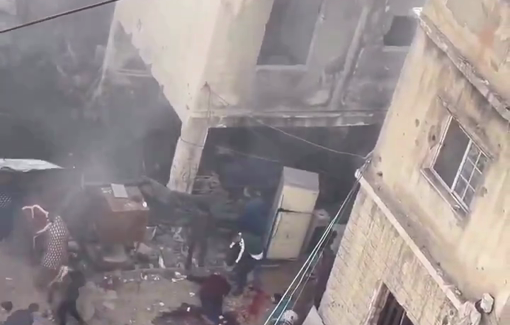
On January 31 2026, at approximately 11:15, an Israeli airstrike targeted twice a building, belonging to the Rizq family, south of Souad School,, near an UNRWA clinic in al-Naser neighborhood, Gaza City.
Shortly after three family members were killed in a bombing in front of a blacksmith’s workshop owned by the family.
The strike occurred at a time when the area was witnessing active civilian movement, reflecting a deliberate disregard for civilian life and the sanctity of health facilities and their surroundings, in blatant violation of international humanitarian law.
**Names of the martyrs:**
1- Nabilah Mohammed Ibrahim Rezeq Abu Qa‘oud (69)
2- Mohammed Ahmed Rezeq (7)
while others sustained injuries.
**Weapons:**
According to MK-80 series bomb with a JDAM kit visible before impacting the Rizq family home, Gaza City, in a second strike. The first strike reportedly killed three people, and the secondary strike reportedly wounded some. The MK-80 series (Mk 81, 82, 83, 84) is a family of low-drag, conventional general-purpose bombs (500–2,000 lbs) designed for high-speed, accurate bombing. When combined with a Joint Direct Attack Munition (JDAM) guidance kit, they transform into smart, GPS/INS-guided weapons (GBU-31/32/38) capable of 5-meter accuracy in all weather condition.
Massacre of Al-Atbash family near Al-Abbas intersection (Gaza City)
Gaza, Gaza City, Rimal
31 January, 2026
At least 5 martyred
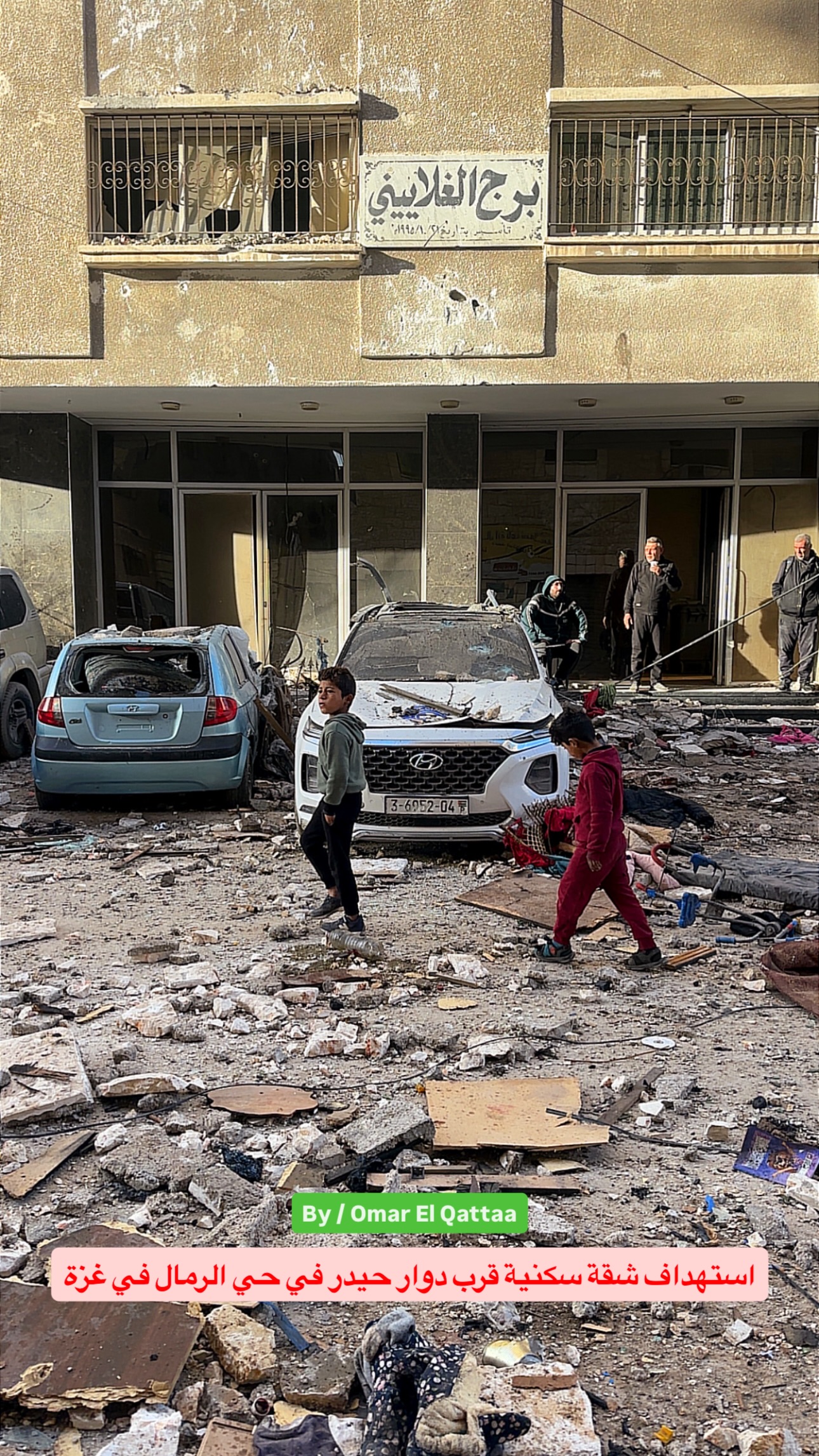
On January 31, 2026, in a clear violation of the so-called ceasefire, an Israeli airstrike targeted a residential apartment located in front of Al-Ghalayini Tower, at the Al-Abbas intersection in the Al-Rimal neighborhood, west of Gaza City, near the Jabalia Junction.
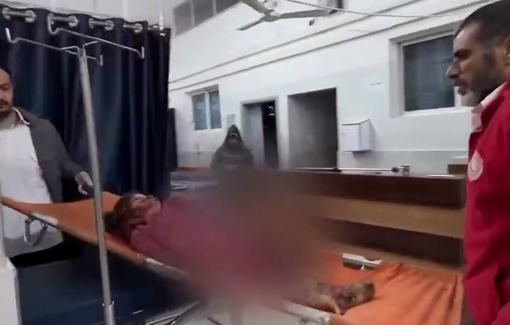
According to medical sources, four Palestinians were killed in the strike, including two young girls and one woman, and several others were wounded, when Israeli warplanes struck the apartment building near the Abbas Junction.
Initial reports mentioned one-way drone struck the targeted apartment ().
**Name of the martyrs:**
The total was updated to five: four children and one woman.
1. Zeina Mahmoud Al-Atbash (child, girl)
2. Maryam Mahmoud Al-Atbash (child, girl)
3. Menna Mahmoud Al-Atbash (child, girl)
Based on the preschool they attended, their maximum age is six years old. They are siblings.
4. Alfat Ahmad Al-Atbash (mother)
5. Islam Al-Atbash (daughter)
**Broader context:**
At least 29 Palestinians, half of them children, have been killed in Israeli attacks on the Gaza Strip since dawn, a day before the Rafah crossing is due to reopen.
**Weapons identification:**
According to Trevor Ball, the pictures show the remnants of an Israeli turbojet powered missile/one-way attack drone found after a strike in Gaza City that reportedly killed 4 people, including a woman and 2 children. (This same munition has been used in two strikes on [Nasser hospital](https://osmp.ngo/osmp1224/), and strikes on two different schools)
Day 848 in Gaza (Ceasefire violation)
Gaza
31 January, 2026
At least 31 martyred
On January 31, 2026, at least 29 Palestinians were killed in Israeli airstrikes on the Gaza Strip since dawn today, including:
**Southern Gaza:**
7 killed in an Israeli strike on a tent belonging to the Abu Hadayid family in the Al-Mawasi area of Khan Younis, southern Gaza Strip. In southern Gaza, seven Palestinians were also killed and others wounded when a tent sheltering the Abu Hudaid family was struck in the Asdaa area northwest of Khan Younis.
Israeli Airstrike on The Administration Building of A Refugee Camp (Gaith Camp) in Al Mawasi, Khan Younis. Israeli Military targeted the camp after reportedly issuing a warning.
Israeli warplanes renewed their airstrikes a short while ago on tents housing displaced people in the Mawasi area of Khan Younis, in the southern Gaza Strip.
Israeli fighter jets continue to fly at low altitudes over the southern Gaza Strip.
**Central Gaza:**
The young Palestinian girl Hala Ahmed Abu Dhalfa, from the Shuja’iyya neighborhood, was killed by gunfire from Israeli occupation Israeli naval military gunboats near the beach of the Nuseirat refugee camp in the central Gaza Strip. She went to the beach this evening along with her family, trying to escape the harsh life in tents. While she was playing, an Israeli boat fired at her, killing her instantly.
**Gaza City:**
5 killed in an Israeli strike targeting a residential apartment near Al-Abbas intersection in central Gaza City. Several causalities were reported following an Israeli drone strike on an apartment building near the Jabalia Junction east of Gaza City. According to medical sources, four Palestinians, including two girls and a woman, were killed, and several others wounded, when Israeli warplanes targeted an apartment building near the Abbas Junction west of Gaza City
14 killed as a result of an airstrike on the Sheikh Radwan police station, northwest of Gaza City.An Israeli army drone strike Saturday on the Sheikh Radwan neighborhood, north of Gaza, killed 14 Palestinian civilians and wounded dozens.
3 killed in an Israeli strike targeting civilians in front of a house belonging to the Rizq family on Al-Nasr Street, west of Gaza City.Dozens were wounded.
**Northern Gaza:**
A 3-year-old child killed after being shot in the neck by Israeli occupation forces in Jabalia Camp in the evening.
## **Timeline of Events**
At 04:00 – Gaza City (West, near Haidar Intersection), an Israeli warplanes struck a residential apartment belonging to the al-Atbash family. Killed 5 civilians, the family was asleep; no military necessity identified.
At 05:30 – Asda’a City, northwest of al-Mawasi (Khan Younis)
Israeli warplanes targeted a tent sheltering displaced Palestinians. Killed 7 members of one family including 3 children, a woman, and an elderly man. The tent caught fire immediately, causing severe burns and dismemberment.
At 11:15 – Al-Naser Neighborhood, Gaza City (near UNRWA clinic), Israeli warplanes bombed a house belonging to the Rizq family. Killed 2, including 1 child. The area was crowded with civilians and the attack occurred near a medical facility.
At ~11:15 – Al-Naser Neighborhood, Gaza City; Two missiles struck al-Sheikh Redwan Police Station, which had resumed operations after the ceasefire. Killed: 15 people: 6 civilians and 9 Palestinian police officers (including 4 women). No clashes were reported at the time of the strike.
At 12:50 – Old Gaza Street, Jabalia (Northern Gaza Strip). An Israeli drone targeted a group of civilians. Killed one and injured 2 others, seriously.
**Names of the martyrs:**
List of Martyrs
Saturday, 31 January 2026 – Gaza Strip
1. Olfat Ahmed Ibrahim al-Atbash (61)
2. Islam Mohammed Ibrahim al-Atbash (24)
3. Zina Mahmoud Sami al-Atbash (3)
4. Mariam Mahmoud Sami al-Atbash (5)
5. Menatallah Mahmoud Sami al-Atbash (7)
6. Rebhi Hammad Mohammed Abu Hadayed (69)
7. Mohammed Rebhi Hammad Abu Hadayed (36)
8. Hazem Rebhi Hammad Abu Hadayed (39)
9. Hejar Rebhi Hammad Abu Hadayed (27)
10. Laya Mohammed Rebhi Abu Hadayed (5)
11. Sham Hazem Rebhi Abu Hadayed (7)
12. Jebreel Hazem Rebhi Abu Hadayed (8)
13. Nabilah Mohammed Ibrahim Rezeq Abu Qa‘oud (69)
14. Mohammed Ahmed Rezeq (7)
15. Kamal Mohammed Ahmed Khader (35) (Jabalia)
16. Hala Ahmed Abu Dhalfa
**IDF spin:**
"In response to the violation of the ceasefire agreement, in which 8 terrorists were identified exiting the underground terror infrastructure in eastern Rafah, the IDF and ISA have struck 4 commanders and additional terrorists from the Hamas and Islamic Jihad terrorist organizations across Gaza.
The IDF also struck a weapons storage facility, a weapons manufacturing site, and 2 launch sites belonging to Hamas in central Gaza."
Israeli Settlers Attack on the Bedouins of East Jabaa
West Bank, East Jerusalem/Al-Quds, Jaba', Maazi Jabaa
29 January, 2026
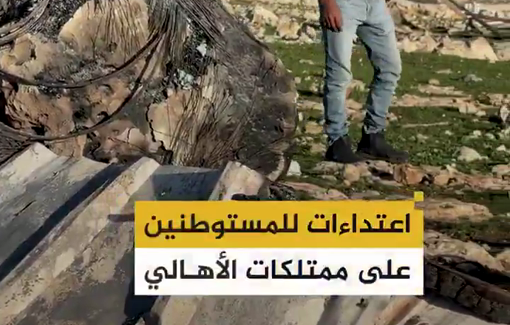
On January 29, 2026, residents of the the al-Ma’azi Bedouin community of East Jabaa, near the town of Jaba’, northeast of Jerusalem. (AKA Maazi Jabaa معازي جبع) reported an attack carried out by 30 Israeli Settlers that burned at least 2 residential units and sent one injury to hospital.
he Jerusalem Governorate reported that colonists launched an attack on the community; however, no confrontations were reported.
Several attacks were reported and documented in this community in the past 3 months. The repeated attacks aim to seize hundreds of dunums of land to expand the Adam colonial settlement on Jaba’ lands and connect it with the Binyamin settlement, creating geographic continuity between the two.
The community is home to around 200 people, including approximately 40 families and 70 children under the age of 18, living in harsh conditions without basic necessities.
The area is part of the administrative designation 'C' (Israel responsible of both internal affairs and security). Official, rights, and UN reports indicate that more than 33 Palestinian Bedouin communities have been displaced since the start of the Israeli aggression on October 7, 2023, across 66 locations in the West Bank, leading to the forced transfer of 2,373 residents.
Coordinated pogroms on various villages in Masafer Yatta
West Bank, Masafer Yatta, Al-Khalil/Hebron
27 January, 2026
On the evening of January 27, a coordinated and ongoing wave of settler violence unfolded across Masafer Yatta in the occupied West Bank. Dozens of Israeli settlers, accompanied by Israeli soldiers and police, attacked at least three Palestinian villages: Khirbet al-Halawa, Fakhit, and Taban (with additional attacks reported in Khirbet al-Qin).
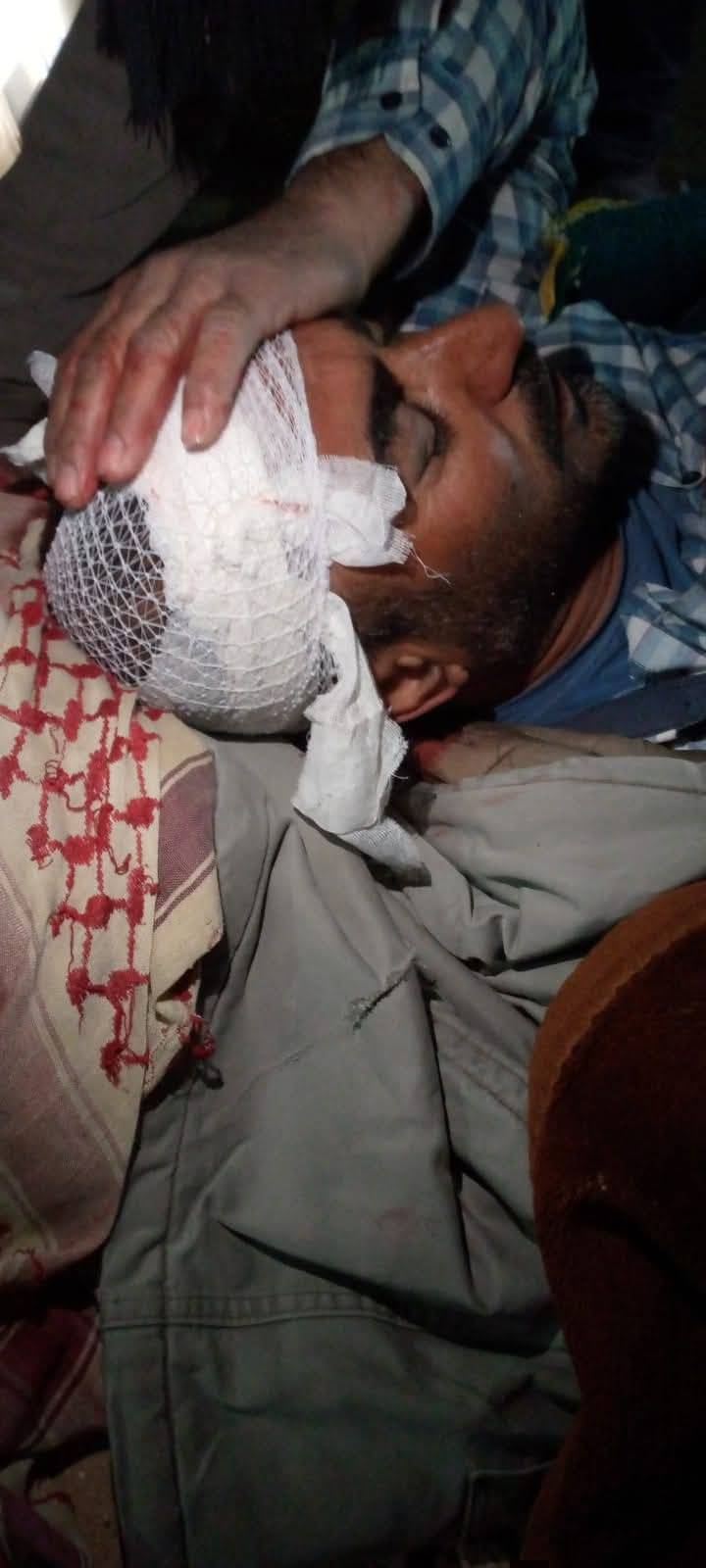
Settlers stoned residents, causing multiple injuries, including at least two people with head wounds. Among the wounded were an elderly man with a head injury and an elderly woman with a head injury and a suspected broken arm. Several other residents were injured.
Settlers set fire to homes, vehicles, hay bales, and other property, smashed cars, and stole large numbers of livestock, including reports of up to 150 sheep stolen in Khirbet al-Halawa. The total value of stolen and destroyed property is estimated at hundreds of thousands of shekels.
At around 8:00 p.m., armed settlers and Israeli soldiers blocked an ambulance attempting to reach the wounded in Khirbet al-Halawa. Ambulances were prevented from accessing the villages for over an hour; soldiers reportedly confiscated ambulance keys, forcing medics to proceed on foot. In one incident, settlers opened the doors of an ambulance and harassed those inside, while standing alongside soldiers. Two injured people were eventually evacuated by the Red Crescent from a shelter, one of whom suffered a head injury after being beaten with a baton.
Throughout the evening, Israeli soldiers assisted the attackers by preventing medical access, allowing settlers to move freely from village to village, and arresting two Palestinian women from Khirbet al-Halawa instead of intervening against the attackers.
Later that night, residents of Susiya reported settlers arriving at the nearby Susya settlement and unloading livestock, believed to be the same animals stolen earlier during the attacks.
It should be noted that the villages targeted in these attacks are located within “Firing Zone 918”, an area designated by Israeli authorities and long used to justify forced displacement.
**Related attacks earlier the same day:**
Earlier that morning, Israeli settlers from the Susya settlement, acting under the protection of Israeli soldiers, uprooted and destroyed approximately 500 trees—including olive, fig, and almond trees—belonging to the Rumi family in Wadi al-Rakhim, near Yatta. Settlers also broke fences, damaged property, and sprayed racist slogans on house walls, and burned Palestinian property in several locations across Masafer Yatta.
**Statement of Ofer Cassif:**
*"Today, around the world and also in the Knesset, we marked International Holocaust Remembrance Day.
In the past few hours, the successors of the Nazis, terrorist settler militias, have been rampaging through villages in Masafer Yatta in the occupied West Bank, burning property, shooting and wounding people, some of them seriously, and stealing their herds.
The occupation forces are assisting the rioters and preventing ambulances from evacuating the wounded.
The police refuse to arrive.
The routine of occupation, ethnic cleansing and war crimes."*
**Basel Adra, resident of Al-Tawani and witness, with activists, of the events, wrote his testimony for +972:**
Israeli settlers attacked three villages simultaneously over five hours, setting homes on fire, looting livestock, and assaulting residents.
Israeli soldiers blocked ambulances, arrested Palestinians, and in some cases participated in beatings.
**Victims and Incidents:**
in Al-Tuban, Samir Hamamda, 42, and his family: settlers tried to burn the shed where they lived (after his home had been demolished in November). Flames were extinguished, but children suffered from smoke inhalation. Hamamda’s car was damaged during the attack.
in Al-Fakheit, Mohammad Abu Sabha, 49: attacked near his home, beaten, unconscious, bleeding; daughter Naghm, 16, struck; mother Duha, elderly, hit on head, arm broken, rib fractured. Ambulances delayed due to soldiers blocking access; Mohammad and his mother transported to Al-Ahli Hospital, Hebron.
in Al-Halawa, Settlers attempted to seize livestock from Hajj Ahmad Abu Aram, 73, and his daughter Widad Abu Aram, 53, was beaten while trying to protect animals. Fatima Abu Aram, 37, was handcuffed and assaulted while settlers stole her father Fadel Abu Aram’s goats. Khalil Younis Abu Aram, his brother, and sons detained and beaten alongside settlers’ attacks. Approximately 300 sheep stolen from 11 families.
Soldiers and police stood by, set up checkpoints, blocked ambulances, and confiscated phones and keys. Some soldiers reportedly participated in the beatings. Civil Administration vehicles escorted ambulances eventually.
in Wadi Al-Rakhim, the night before, settlers cut down ~500 olive trees of the Rumi family in apparent revenge for the Karm Susya vineyard on Nawajah family land. Army stated forces were deployed due to “frictions” after reports of an Israeli being attacked, acknowledged ambulance delays, and said it was investigating soldiers’ conduct
**The Israeli police spin:**
*"Last night, the Hebron (#الخليل) area witnessed a series of violent incidents that required the intervention of the army (#الجيش) and police (#الشرطة) (Yehuda and Samaria Brigade #يهودا_السامرة):
In Khirbet al-Halawa (#خربة_الحلاوة): A shepherd in his twenties from southern Hebron was assaulted, and his livestock and equipment were stolen, causing him minor injuries. Three other local residents were also injured in the incident.
In Khirbet al-Fakhit (#خربة_الفخيت): Clashes broke out that forces intervened to disperse. During the incident, a local woman attacked a female army officer, injuring her in the face. The attacker and another woman (aged 50s–60s) were arrested for questioning.
In Beit Fajjar (#بيت_فجار): Police and forensic experts investigated the burning of two vehicles, collecting evidence to identify the perpetrators.
The police confirmed that they are investigating all violent incidents in coordination with security agencies to bring those involved to justice"*
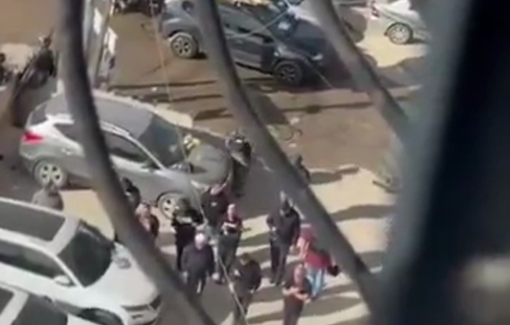
Operation "Capital Shield" in Kafr Aqab and Qalanqia (Eviction, demolition and ethnic cleansing)
West Bank, East Jerusalem/Al-Quds, Kafr Aqab
26 Jan, 2026 - 27 Jan, 2026
On December 23, 2025, Jerusalem District Commander Avshalom Peled and Israeli security forces launched a campaign in occupied East Jerusalem, including at least two major operations targeting three Palestinian communities. The Operation "Capital Shield" (Magen HaBira / Shield of the Capital) was launched by Israeli police, Border Police, the military, and municipal authorities and focused on Palestinian areas in and around Jerusalem, including Kafr Aqab, Qalandiya, and Shuafat refugee camp. ([See event](https://genocide.live/events/2456)
Operation “Capital Shield,” is carried out under the pretext of curbing crime and terror. Since January, Israeli forces are intensifying their raids of Palestinian locales, detaining hundreds of Palestinians, and issuing sweeping demolition orders. Palestinians say this is part of a larger plan to cement Israeli sovereignty over the city and its outer perimeter, thereby furthering the state’s goal of Judaizing Jerusalem
According to Unipal, they targeted Kafr Aqab neighbourhood and the boundaries of Qalandiya refugee camp. Israeli security forces reportedly demolished 70 Palestinian structures. This appears to be in preparation for major settlement projects in the area.
## **Reasons Identified by Experts and Palestinian Analysts:**
According to [this article](https://www.jerusalemstory.com/en/article/palestinians-explain-motives-behind-israels-operation-capital-shield-and-around-jerusalem?utm_source=chatgpt.com), some experts and organizations view Capital Shield as part of a broader strategy associated with Bezalel Smotrich's 2017 "Decisive Plan," which they describe as seeking permanent Israeli sovereignty between the Mediterranean Sea and the Jordan River.BADIL Resource Center describes this operation as “Forced displacement, mass demolitions, fragmentation of Palestinian space, and the systematic dismantling of Palestinian urban, social, and political life.”
A. Isolate Palestinian neighborhoods from Jerusalem: Separate Palestinian communities from one another and reduce links between East Jerusalem and surrounding Palestinian areas.
B. Sever the Jerusalem–Ramallah connection, particularly through actions in Kafr ‘Aqab and Qalandiya, which sit between Jerusalem and Ramallah.
C. Consolidate Israeli control over Jerusalem's northern entrances
D. Prevent geographic and demographic continuity between Jerusalem and the rest of the West Bank.
E. Facilitate settlement expansion. The demolitions are linked to the planned Atarot settlement, expected to contain more than 9,000 housing units.
F. Advance the "Greater Jerusalem" project by expanding effective Israeli control beyond current municipal boundaries. How? By connecting Israeli settlements while fragmenting Palestinian territory.
G. Create pressure for Palestinian displacement and tehnic cleansing. Through demolitions, restrictions, isolation, and intensified control, the operation makes life increasingly difficult and encourages residents to leave.
## **Timeline of Operation “Capital Shield”**
**23 Dec 2025: Phase 1 begins**. Israeli authorities launch the first stage of Operation Capital Shield, targeting Kafr ‘Aqab and Qalandiya refugee camp, areas beyond the Separation Wall.
**12 Jan 2026** Israeli police raid Shu‘fat refugee camp. Thirty-two Palestinians are arrested; weapons, drugs, vehicles, smuggled cigarettes, and unstamped eggs are confiscated. The operation is publicly branded “Capital Shield.”
**12–20 Jan 2026: Phase 2** continues in Shu‘fat refugee camp over several days.
**20 Jan 2026**: Demolition of the UNRWA headquarters in Sheikh Jarrah.
**Jan 2026:** Israeli police shut down cultural events in East Jerusalem, including an exhibition at Al-Hakawati Theatre and a screening at Yabous Cultural Centre, claiming they support terrorism.
**26 Jan 2026: Phase 3 begins**, targeting the Jerusalem Airport area (inside the wall), Kufr ‘Aqab, and Hizma. 26–27 Jan 2026 More than 40 buildings are demolished around the former Jerusalem Airport area; more than 70 properties are demolished across the targeted northern Jerusalem areas.
**3 Feb 2026:** Israeli forces enter and besiege Hizma; demolition orders are issued for 11 structures.
**5 Apr 2026:** Additional raids reported in Kufr ‘Aqab and Qalandiya refugee camp.
By spring 2026 More than 120 Palestinians arrested and over 70 structures demolished.
## **Details of the events:**
**On January 26 and 27, 2026**, Israeli forces are continuing their military raid north of occupied Jerusalem for the second day in Kafr Aqab and the area surrounding Qalandiya camp, reports on Tuesday said, while settler attacks continued in other areas of the occupied West Bank.
On Monday, schools were evacuated in Kar Aqab as Israeli forces attacked the area and deployed snipers on rooftops.
The forces blocked Airport Road after storming occupied East Jerusalem, obstructing Palestinian movement, including students and teachers, while also raiding the Al-Ma'dhoun neighbourhood.
Local media reported the ongoing assault had paralysed the area and triggered panic among residents, with road closures causing traffic jams and preventing people from going to work.
Meanwhile, the military also issued demolition notices against several Palestinian businesses near Qalandiya camp, forcing owners to evacuate the area. The Jerusalem Governorate confirmed the demolitions on al-Matar Street near the camp.
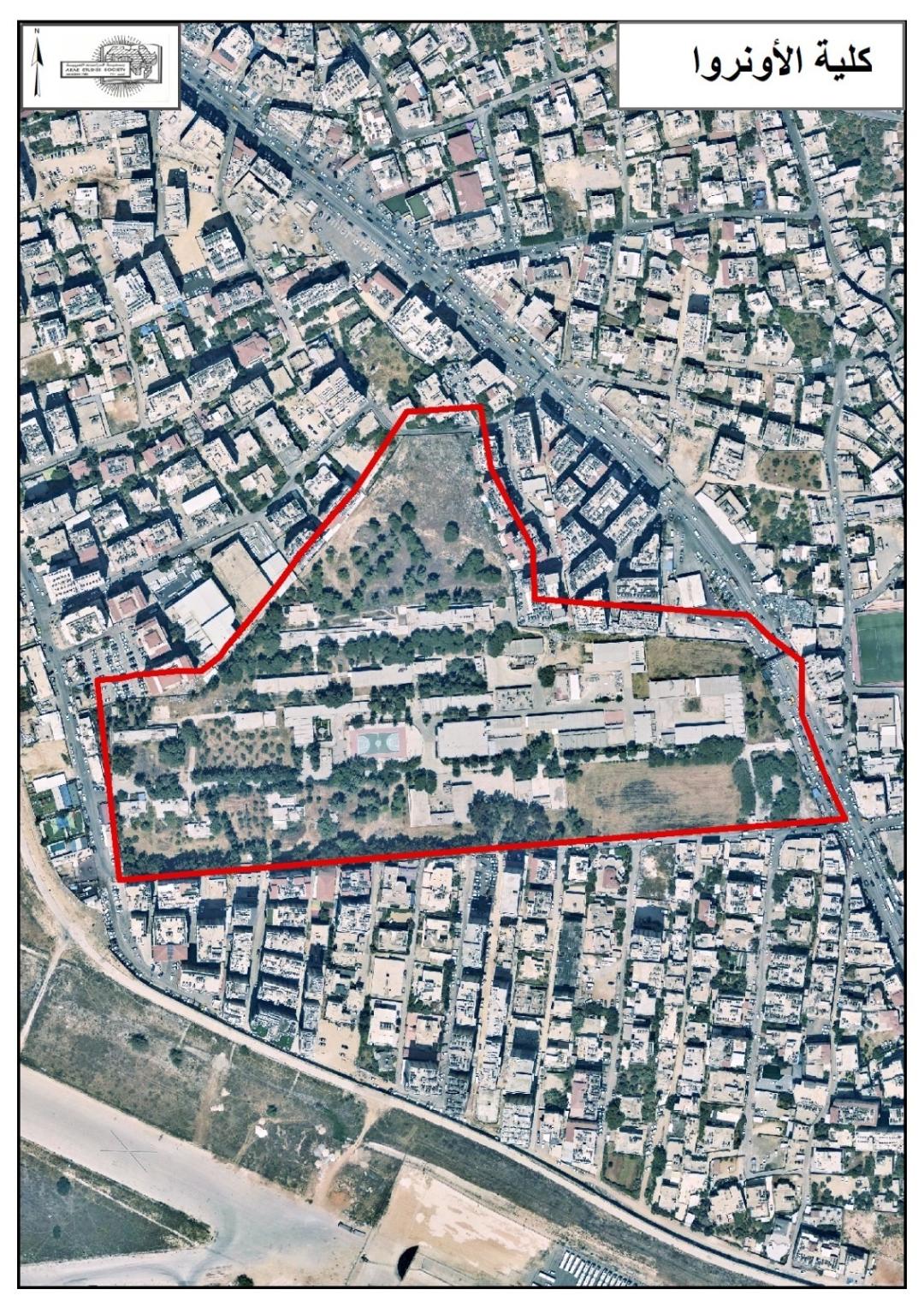
**On June 11, 2026,** the Jerusalem Governorate warned against the Israeli municipality's plan to establish what it calls a new "educational complex" in the Kafr Aqab neighborhood, north of occupied Jerusalem, on land that has long housed a vocational training college operated by UNRWA. The proposed plan (No. 1421205) covers approximately 82 dunums and is presented as a response to the shortage of classrooms and educational facilities in Kafr Aqab. However, the governorate argues that its practical outcome would be the removal of UNRWA’s Vocational Training College and the termination of its activities at the site. The statement emphasized that the occupation, which bears direct responsibility for the chronic education crisis in Palestinian neighborhoods as a result of decades of discrimination and deliberate neglect, is now attempting to exploit this very crisis to justify land confiscation, property seizure, and the undermining of institutions that provide vital services to Palestinians, instead of addressing the root causes of the existing deficit.
**On June 22, 2026,** Israeli forces demolished on Monday a Palestinian house and a residential building. Israeli forces, accompanied by bulldozers, stormed the al-Turi neighborhood in Kafr Aqab and demolished a two-story house belonging to Nafiz al-Jab’a, which included a residential apartment and storage rooms.They also demolished a three-story residential building belonging to Muhammad Zakaria Abu Saif.
A Palestinian man was injured by Israeli forces on afternoon during the raid. The Palestinian Red Crescent Society reported that its crews treated a man with a rubber-coated bullet wound to the knee, who was transferred from Al-Shifa Medical Center in Kafr Aqab.
According to sionist sources, Israeli police forces (MAGAV) operated in Kafr 'Aqab, "an area in Jerusalem where "Palestinian" Arabs have built structures illegally and so the police are coming to enforce the demolition of the structures as well as protect the demolition workers from being attacked". In a statement, Israeli police claim the raid, called "Captain Shield", was launched to strengthen "sovereignty in the seam zone and enhance the sense of security in the public space".

Assassination of the journalist Sheikh Ali Noureddine
South Lebanon, Tyr, Sour
26 January, 2026
At least 1 martyred
On January 26, 2026, in the afternoon, an Israeli military drone targeted a vehicle on the road linking Hosh to Sour in southern Lebanon. The driver, Sheikh Ali Noureddine, was critically injured and later succumbed to his wounds near the Hosh mosque.
Lebanon Foreign Minister Joe Rajji sent a letter to the U.N. Security Council and its secretary-general, lodging a complaint over Israel’s ongoing violations of Lebanese sovereignty in recent months, according to the state-run National News Agency (NNA)
The Hezbollah's media relations condemned "the treacherous assassination committed by the Israeli enemy against the journalist and imam of the town of Al-Housh in the city of Tyre, Sheikh Nour al-Din, in an attack that amounts to a war crime, and is added to the enemy’s record of brutal crimes against media professionals, civilians, and humanity as a whole". She pointed out that "targeting the martyr journalist warns of the danger of the enemy continuing its attacks to affect the media body in all its forms and names, in continuation of the policy of systematic assassinations and attempts to silence the word of truth and the free voice".